
Blue Myrtle Cactus Care: The Real Science
Blue Myrtle cactus care explained through glaucous wax, CAM physiology, light, drainage, water quality, and practical pest-treatment choices.
Maya Ellison · 2026-01-09 · Updated 2026-08-03 · 16 min read
Key Takeaways
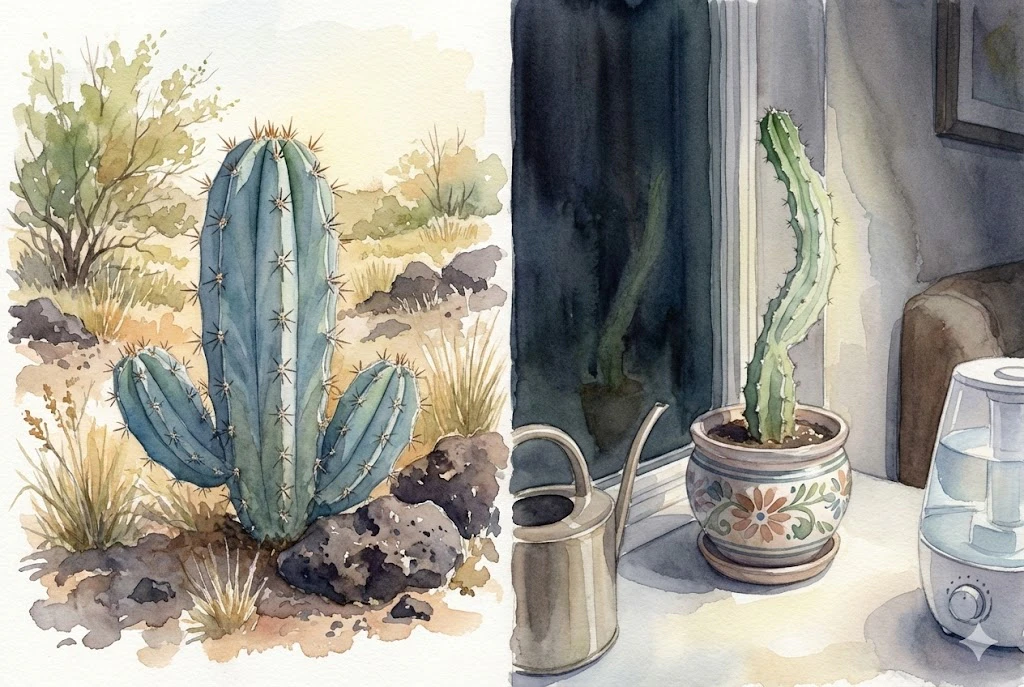
- The blue-grey surface comes from glaucous wax. Its appearance can vary with tissue age, exposure, and handling, so increase light gradually rather than treating one intensity as universal.
- Oils and wetting agents can mark the bloom. Inspect first, isolate an affected plant, and choose a label-compliant treatment that fits the pest and the plant's surface.
- Watering should follow active growth, pot dry-down, and root-zone temperature. Many cacti use CAM, but a calendar alone cannot set the interval.
- Use an open, fast-draining mix. Tune its mineral and organic fraction to the pot, climate, and observed drying rate.
- Provide the brightest stable light the plant can tolerate after acclimation. Stretched growth cannot be reversed, but future growth can be kept more compact.
Geological and Climatic Origins
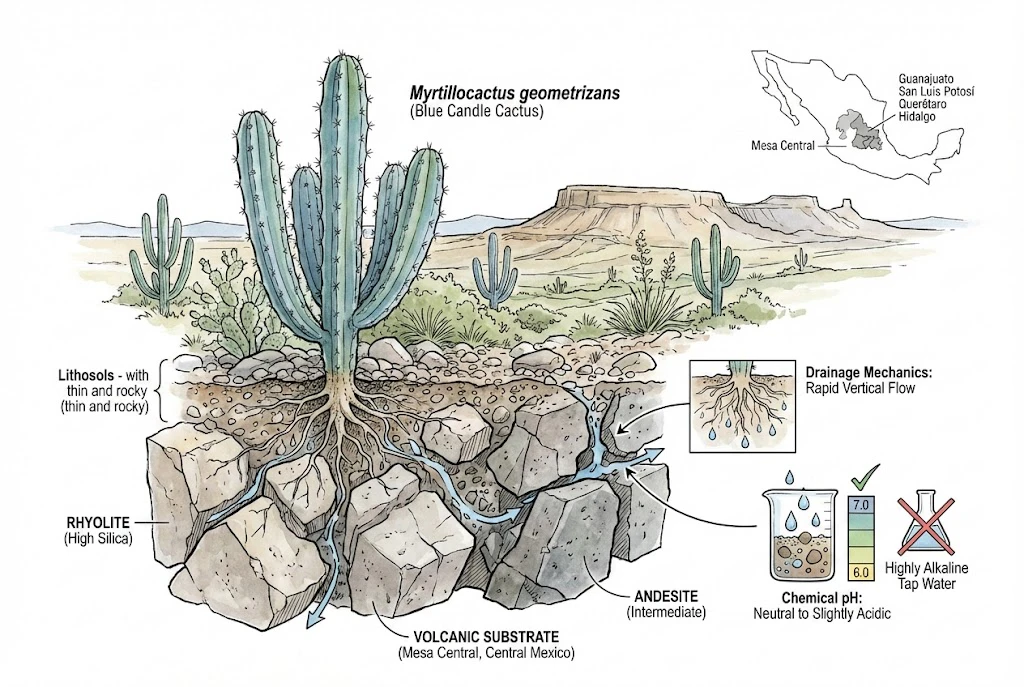
To understand the requirements of Blue Myrtle Cactus (Myrtillocactus geometrizans), it helps to examine its natural habitat.
The geological composition of this environment determines both the chemical properties of the water the plant absorbs and the physical conditions surrounding its root system.
The Volcanic Substrate of the Mesa Central
Start with native range and variation
Blue Myrtle Cactus (Myrtillocactus geometrizans) is native to arid and semi-arid regions of Mexico, where it spans many states, elevations, and soil types rather than one narrow habitat.
The Mesa Central includes landscapes shaped by historical volcanic activity. Field descriptions from Guanajuato include hard rhyolite and andesite, rocks that weather slowly and leave thin, stony lithosols rather than deep organic soil.
That geology matters for cultivation because it points toward a root zone with large mineral particles and predictable air space. It does not, however, prescribe one exact potting recipe.
Drainage Mechanics
Rocky volcanic substrates often drain quickly, but retention varies with weathering, particle size, and pockets of finer material.
For cultivation, the useful translation is an open root zone that drains predictably without staying saturated.
M. geometrizans can take up water after a thorough soak, yet the roots still need air between watering events. Actual pot dry-down is more useful than a geological label alone.
Chemical pH
Across its range this cactus grows in rocky, sandy, and very free-draining soils, often around neutral pH 6.5–7.0.
It is not a strictly non-limestone plant.
Descriptions of its native soils include gypsum, limestone, and salts, so it tolerates a range of soil chemistry.
Prioritize drainage over a precise pH
It wants a fast-draining mix and does best without constantly soggy roots.
Very hard, alkaline tap water over the long term can contribute to nutrient lock-out, but that is about cumulative alkalinity, not a strict lime intolerance.
The Climate (Seasonal Hydrological Cycles)
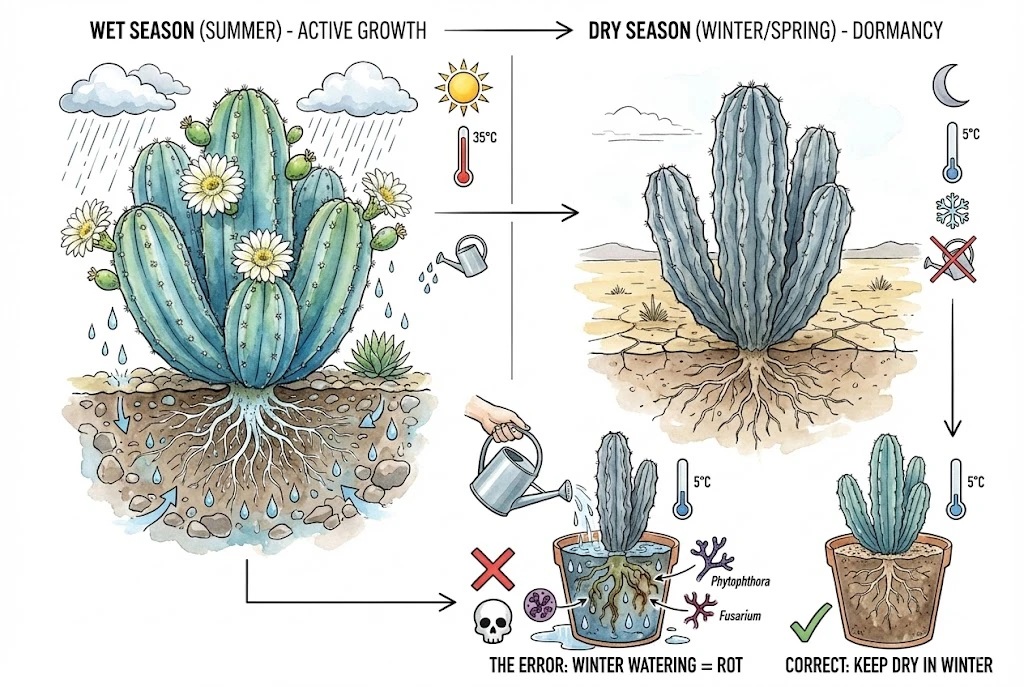
The life cycle of M. geometrizans is defined by a distinct seasonal dichotomy between the rainy and dry periods.
The Wet Season (Summer)
The wet season is the active growth phase. High temperatures and intense solar radiation coincide with thunderstorms that provide periodic hydration.
During the warm, wet months the plant is in active vegetative growth, increasing in volume and producing new branches.
Flowering usually occurs earlier, from late winter into spring, with fruit following into summer. Blooming is not necessarily a rainy-season event.
The Dry Season (Winter/Spring)
Rainfall is minimal in the dry season, often with lower humidity and cooler nights. Indoor plants may slow or stop growth, but the degree of dormancy depends on light, temperature, and the individual plant.
Maintaining a consistent year-round watering schedule can leave the root zone cold and saturated when light and temperatures are low. That raises the risk of root decline because low-oxygen conditions stress roots and favor some water-associated pathogens.
Lengthen the dry-down interval when the plant is cool or inactive, then reassess from pot weight and root-zone conditions rather than applying a universal winter ban on water.
Solar Geometry and Rib Orientation
In Central Mexico, Blue Myrtle Cactus (Myrtillocactus geometrizans) often serves as a dominant species in thorn-scrub forests, where it is exposed to high levels of solar radiation.
Morphological research indicates that the plant exhibits specific directionality in its growth.
Use orientation as a light clue
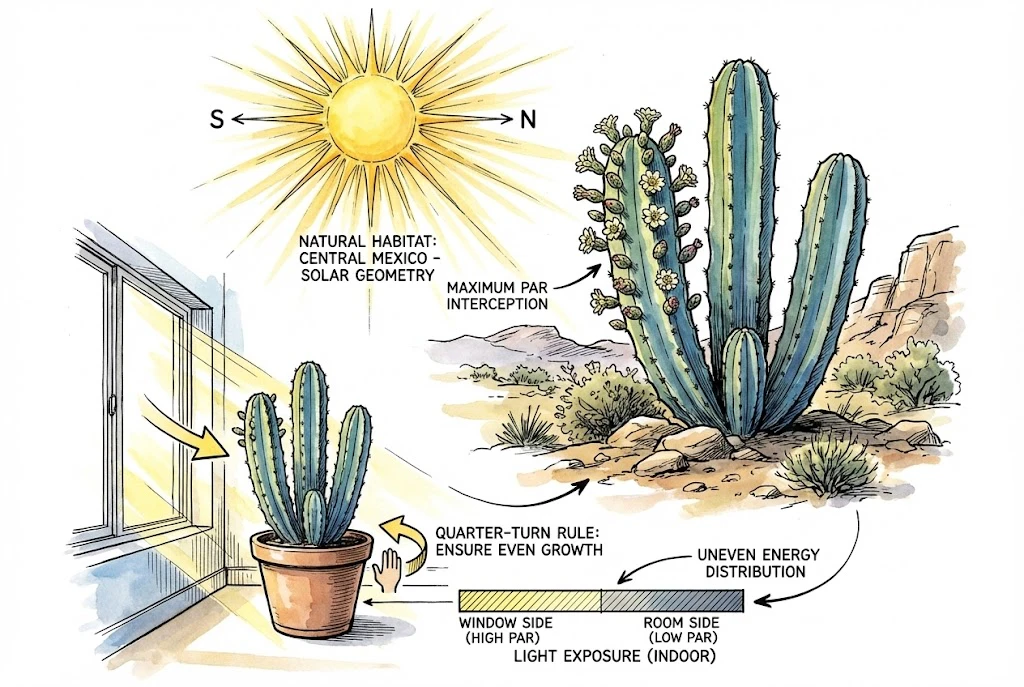
Field research on this cactus found that south-facing branches (which receive more sun in the Northern Hemisphere) tended to carry larger reproductive structures and reached some fruiting stages more strongly than north-facing ones, though overall reproductive success was fairly similar on both sides.
So sun exposure clearly influences growth on a given side of the plant.
Indoors, light usually comes from one direction, which can lead to lopsided growth.
Rotating the pot a quarter turn periodically helps keep growth even. This is sensible general practice rather than a finding of the branch-orientation study.
If a shaded side has been in low light, step it up to strong light gradually to avoid sunburn.
The Physics of Blue: Epicuticular Wax and Structural Coloration
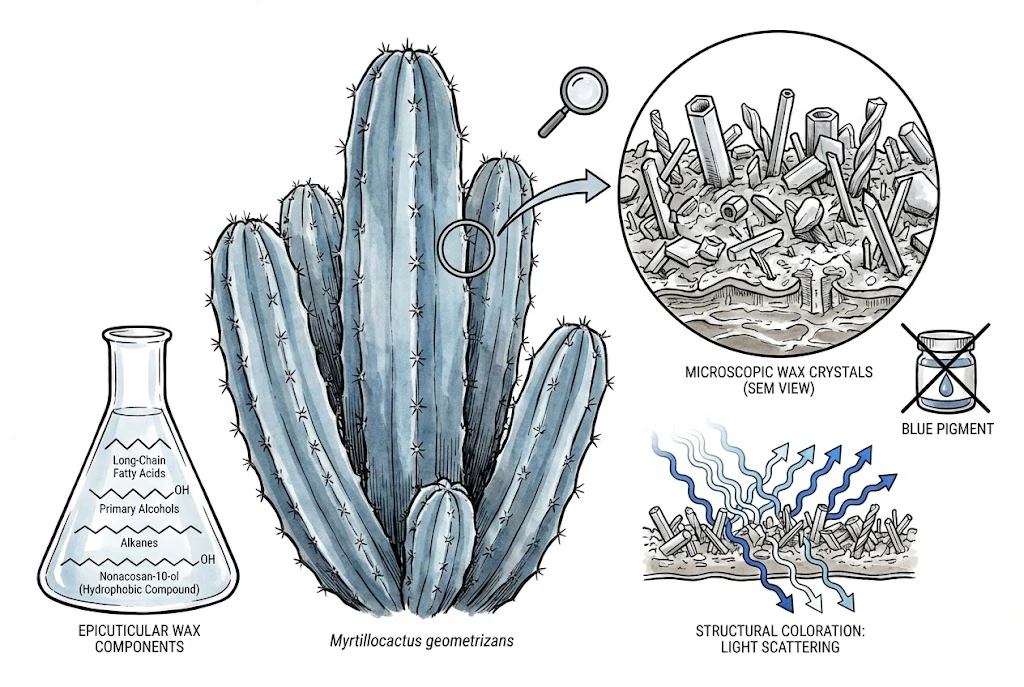
The most distinctive feature of Blue Myrtle Cactus (Myrtillocactus geometrizans) is its powdery, blue-grey appearance.
Blue comes from surface structure
This coloration is a significant factor in its popularity, though its biological origin is often misunderstood. The blue is not caused by a pigment. It is a physical phenomenon known as structural coloration.
The Composition of the Bloom
The surface is covered by epicuticular wax, commonly called bloom. This wax contains mixtures of long-chain fatty acids, primary alcohols, and alkanes, and in many glaucous plants a secondary alcohol can self-assemble into crystalline structures.
Under a scanning electron microscope, the wax appears as microscopic three-dimensional crystals such as tubes, platelets, or rods protruding from the cuticle. Together they create a complex nanoscale landscape that changes how light is reflected.
The Tyndall Effect and Rayleigh Scattering
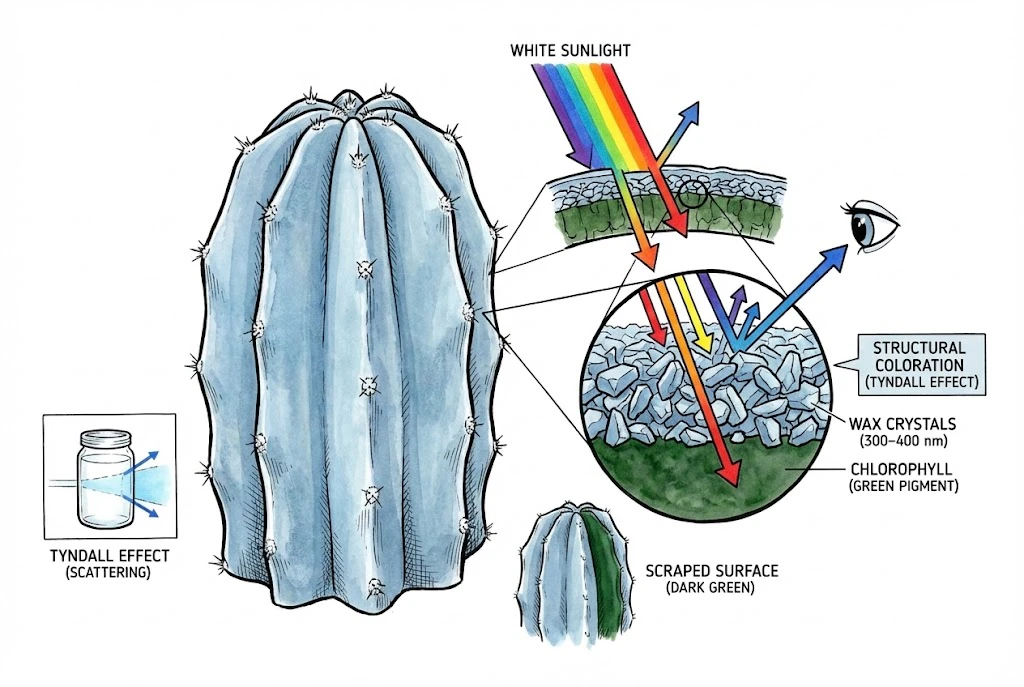
The blue appearance comes from light scattering off the tiny wax structures, a form of structural color rather than pigment. This is broadly the kind of light-scattering often called the Tyndall effect, which makes fine particles look bluish.
It is related to, but not identical with, the Rayleigh scattering that colors the sky. The wax crystals preferentially scatter shorter, bluer wavelengths back toward your eye while longer wavelengths pass through and are absorbed by the green tissue beneath. If the wax is rubbed off, the surface looks plain dark green.
Keep borrowed measurements bounded
Detailed measurements often cited for this effect, including exact crystal shapes, nanometre sizes, and reflectance spectra, come from studies of a blue cycad rather than Myrtillocactus.
The same physics plausibly applies to this cactus bloom, but precise crystal dimensions have not been measured on M. geometrizans. Treat exact numbers as illustrative.
The Biological Function of Blue
The production of this wax may contribute to several survival functions.
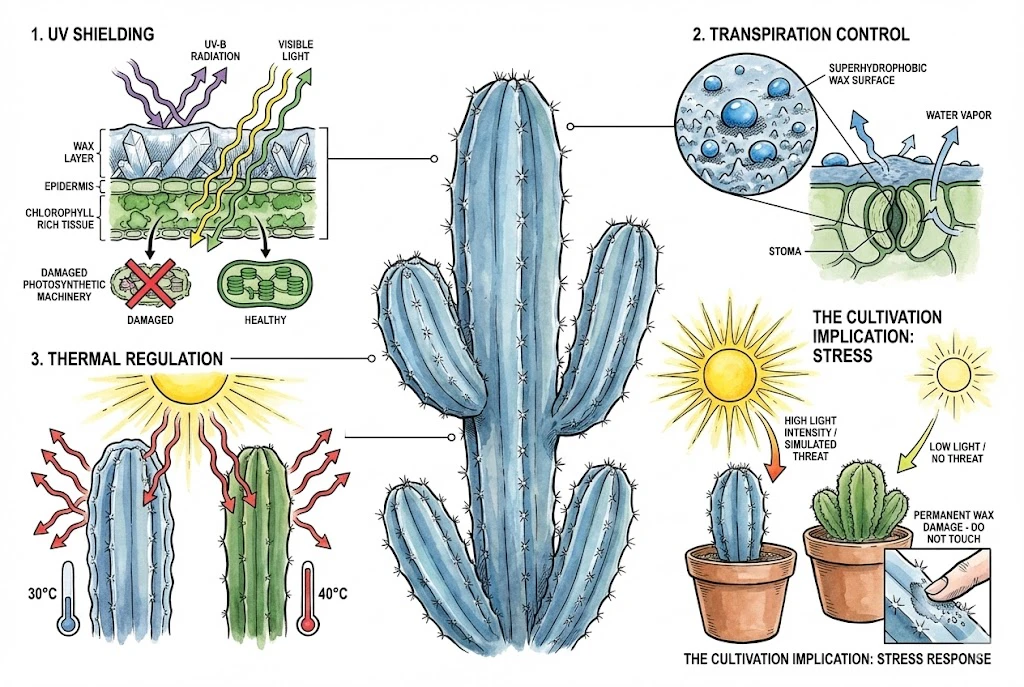
UV Shielding
The scattering effect may reduce some ultraviolet reaching the epidermis, but the strength of that effect is species- and surface-dependent. Treat glaucous wax as a possible protective contribution rather than a measured shield for every plant.
Transpiration Control
The wax layer is hydrophobic and can reduce cuticular water loss, although the effect varies with wax coverage, tissue age, airflow, and humidity.
Thermal Regulation
By reflecting a portion of the solar spectrum, the wax reduces the heat load on the plant tissue.
Research on other glaucous plants suggests that wax may alter heat load, but the result depends on radiation, airflow, and surface structure. It is not a fixed cooling allowance for this cactus.
Understanding these functions clarifies a key aspect of blue myrtle cactus care.
The blue color is an environmental response, not a simple light switch.
Wax coverage and appearance can change with new growth, exposure, water status, and handling.
Lower light may reduce compactness or alter the visible bloom, but it does not establish a universal threshold for wax production or plant health.
Give the plant the brightest stable light it can tolerate after acclimation, and judge success by compact new growth, color, and absence of stress rather than color alone.
The bloom is delicate because it is a thin surface layer of wax crystals. Handling, skin oils, and wetting agents can rub it off or smudge it, and marks on existing tissue generally do not recover. The plant mainly restores the powdery look on new growth, so minimize handling of the blue surface.
Because the blue bloom is easily disturbed, I photograph the ribs and areoles in diffuse light before rotating, cleaning, or treating the plant. On a duplicate image, I mark existing dull streaks, contact marks, and any suspicious pest location. This lets me compare a true new lesion with old wax loss without rubbing the blue surface to test it.
If I need to inspect more closely, I use the photograph or a magnifier rather than handling the bloom repeatedly. I do not try to restore a rubbed patch with a product. The card keeps cosmetic wax loss separate from a pest or disease question, so treatment starts from evidence rather than from a change in color alone.
The Photosynthetic Physiology (CAM)
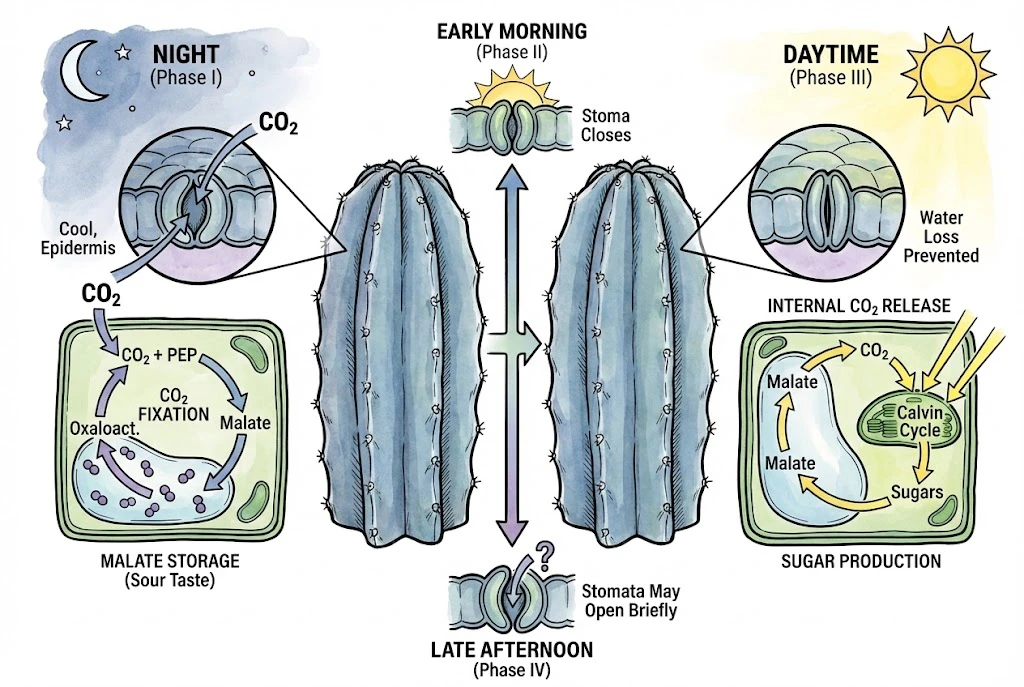
Successful blue myrtle cactus care is helped by understanding the plant's photosynthesis.
Unlike many common houseplants, M. geometrizans uses Crassulacean Acid Metabolism, or CAM.
This water-saving photosynthetic pathway shapes its care schedule and is not a respiratory process.
The Mechanism of CAM
Standard plants typically open their stomata, or pores, during the day for CO2 absorption, which can increase water loss in arid environments. CAM plants shift much of their gas exchange toward cooler hours.
Phase I (Night)
Stomata open during the cooler night hours. CO2 enters and is fixed into oxaloacetate, then converted to malate, or malic acid, and stored in the cell’s central vacuole.
Phase II (Early Morning)
Around dawn the stomata are often still open briefly, and the plant can fix CO2 both via PEPC and directly through Rubisco during this transition before the stomata close for the day.
Phase III (Daytime)
With the stomata closed to conserve water, stored malic acid is released from the vacuole and broken down into CO2 internally. The plant then uses that internal CO2 for photosynthesis with energy captured from sunlight.
Phase IV (Late Afternoon)
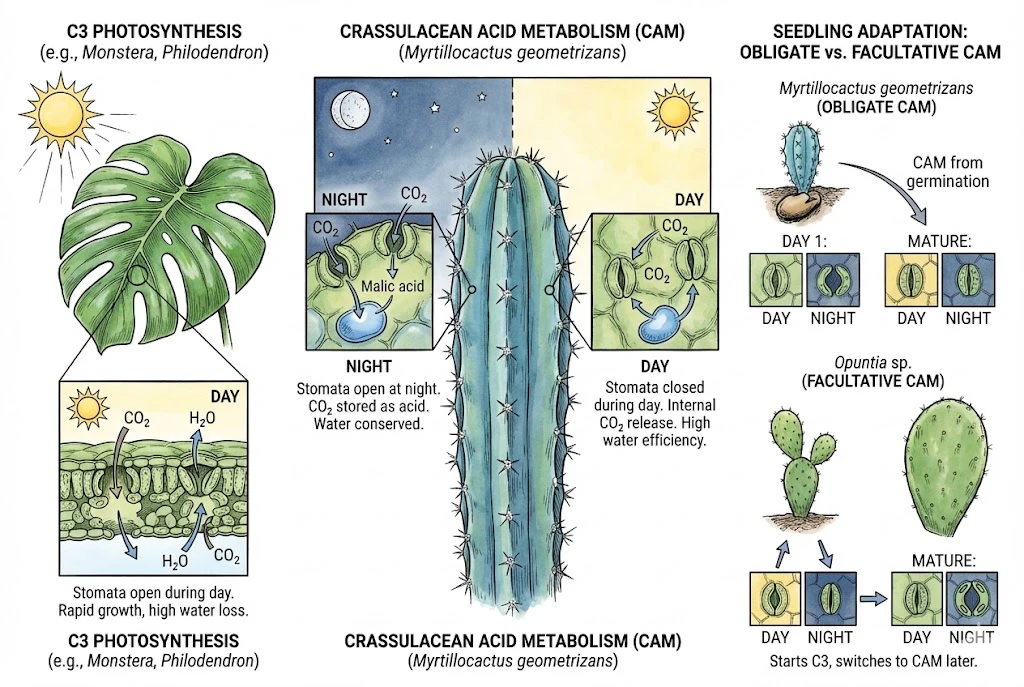
Late in the day, once the stored malate is used up, the stomata may open again if water is available, letting the plant fix external CO2 directly via Rubisco before nightfall. In dry conditions they stay closed until night.
CAM in Seedlings
Some evidence suggests that young Myrtillocactus seedlings show CAM activity within weeks of germination, which fits the broader picture of a strongly water-conserving plant. Other cacti start out more C3-like and shift toward CAM as they mature.
Whether Myrtillocactus is fully obligate CAM from the first day is not firmly established. It is safest to say that it leans heavily on CAM from an early age.
Implications for the Grower
The CAM cycle establishes specific requirements for indoor blue myrtle cactus care.
The Temperature Delta
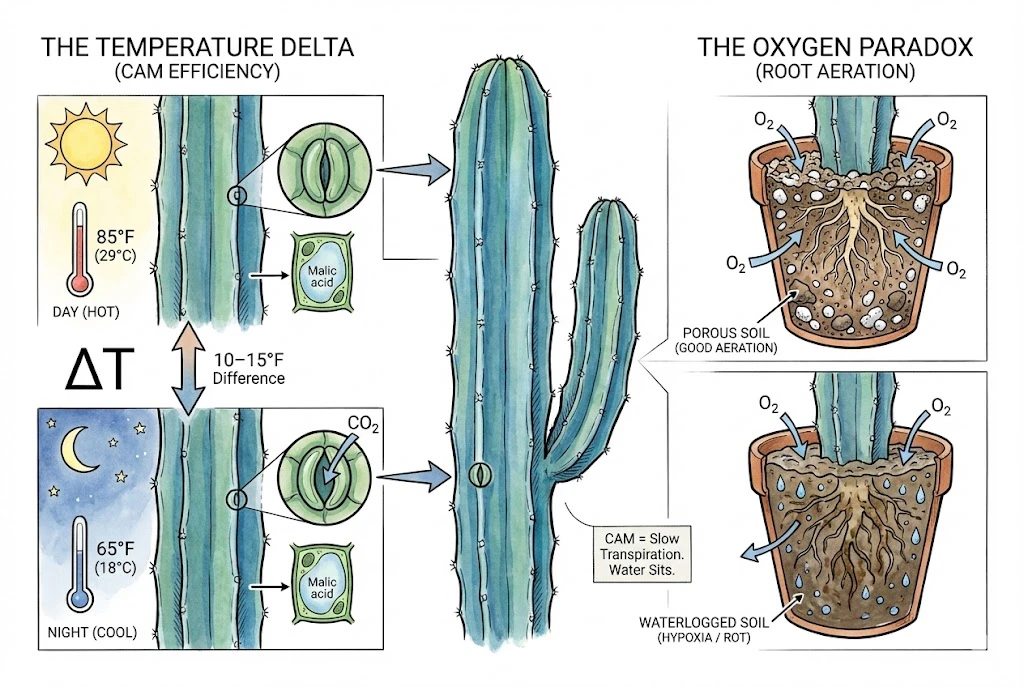
CAM efficiency can be influenced by the night-time temperature drop because enzymes responsible for nocturnal CO2 fixation often operate more effectively in cooler conditions. The response varies by species and environment, and no single night-drop value applies to every home or plant.
Keep the root zone warm enough for the season, provide ventilation, and use the plant’s growth and dry-down as feedback.
The Oxygen Paradox
Soil aeration is critical because the plant is metabolically active at night while roots still require oxygen for respiration. Saturated soil limits gas exchange, which can lead to hypoxia and root rot.
CAM-associated gas exchange can reduce daytime water loss, so water may remain in the substrate longer. Use an open mix and confirm dry-down before watering again.
The Light Equation (DLI, PPFD, and the Photon Diet)
Use light measurements comparatively
The production and appearance of blue wax can respond to light exposure and plant condition.
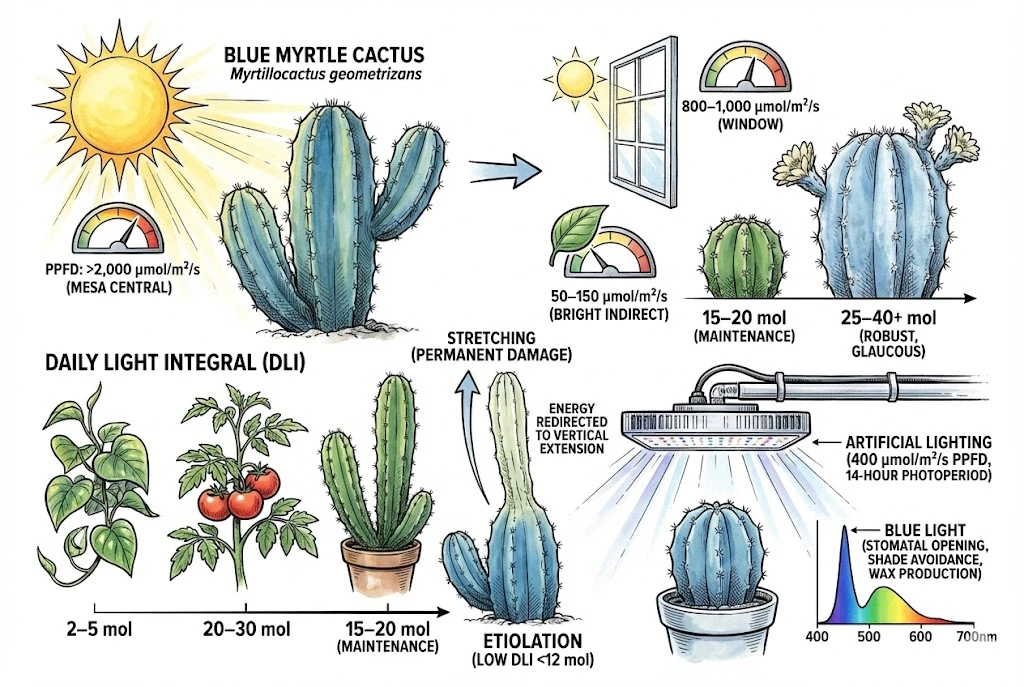
In precision horticulture, light is compared through the Daily Light Integral, or DLI.
Quantifying the Desert Sun
In the Mesa Central, solar radiation is often much stronger than what reaches an indoor shelf.
Photosynthetic Photon Flux Density, or PPFD, and Daily Light Integral, or DLI, are useful ways to compare locations. A single outdoor reading should not be treated as a home-care threshold.
By comparison, indoor light levels vary widely with glass, orientation, season, distance, and shade.
- Direct sun through a window can be intense for part of the day but changes with season and glass.
- Bright indirect light may still be insufficient for compact growth when the plant is far from the window.
- Standard interior lighting is generally not a substitute for a bright window or a suitable grow light.
The DLI Requirement
DLI measures the total quantity of light received over a 24-hour period.
Use DLI to compare setups
For this cactus, use DLI as a comparison tool rather than a pass or fail number.
If new segments become thin, pale, or widely spaced, the current light is probably too weak for the plant's growth rate. If tissue bleaches, scorches, or stays hot, acclimate more slowly or add shade.
Etiolated growth will not become compact again, but improved light can keep subsequent growth closer to the plant's normal form.
Practical Lighting Solutions
A bright window may be enough for a small specimen, while a shaded room or large plant may need supplemental lighting.
Choose a full-spectrum fixture that covers the whole plant and adjust distance and duration from the plant's response, not a borrowed numeric schedule.
Red and blue portions of a full-spectrum fixture can influence photosynthesis and growth form, but the spectrum alone does not guarantee a waxier surface. Coverage, acclimation, and total exposure still matter.
For a small shelf, choose a full-spectrum LED whose published PPFD map covers the whole plant at the mounting height you can actually use. Measure or compare the center and edges after installation, then raise or dim the fixture if the surface heats or new growth pales. Increase daily exposure gradually while watching the next growth, not the old etiolated section. The grow-light guide explains how to size the setup from PPFD and DLI.
Match fixture coverage to the plant
One bulb covers a limited footprint, so a tall or multi-stem specimen may need a wider fixture.
Soil Physics and Chemistry
Keep the root zone open
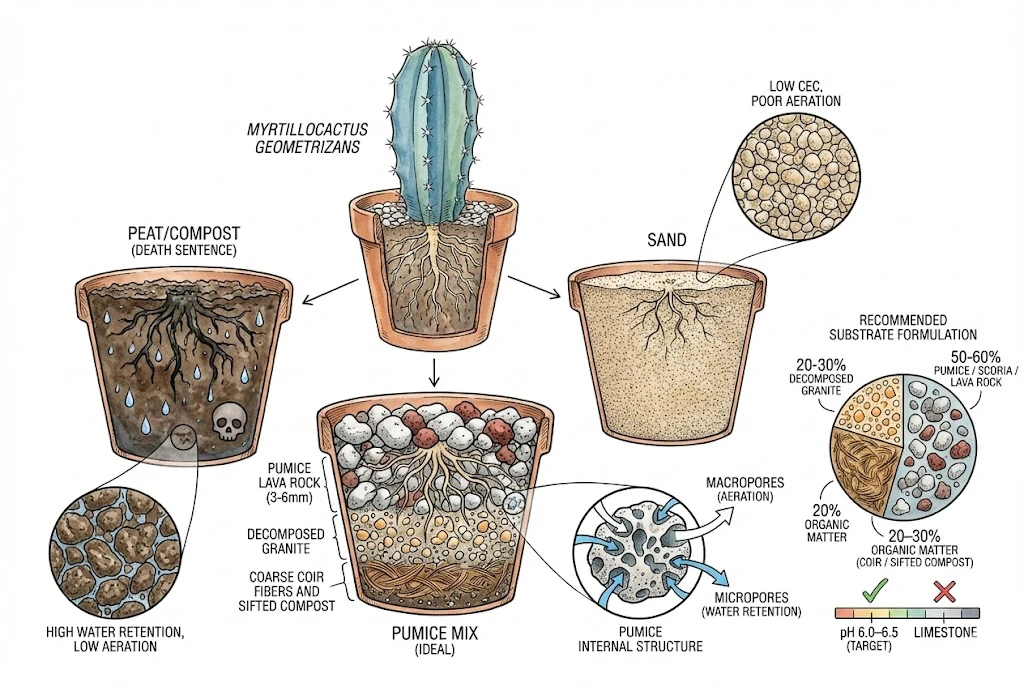
Using a dense standard potting soil can be a poor match for Myrtillocactus in many indoor setups.
Commercial mixes based on peat moss may retain more moisture than the roots can use between waterings.
The Cation Exchange Capacity (CEC)
The soil’s ability to retain and exchange nutrients is known as its cation exchange capacity, or CEC.
- Peat and compost have higher CEC and high water retention.
- Sand has low CEC. Drainage and aeration depend on particle size, and fine sand can reduce aeration.
- Pumice is a useful mineral component with modest nutrient-holding. Pumice and zeolite are not equivalent because zeolite has a much higher cation-exchange capacity.
The Physics of Pumice
Pumice can be a useful aggregate because its internal structure provides both air space and some water-holding capacity, but other stable particles may work in a different mix.
Aeration
The irregular shape of pumice particles creates macropores that facilitate oxygen flow to the roots.
Water Retention
Micropores within the particles hold a small amount of water via capillary action, making it available to the plant without saturating the surrounding area.
CEC
Pumice holds some nutrients, more than inert granite or silica sand, but its cation-exchange capacity is generally low and varies by source and grade. Published values range from just a few up to around 10 meq/100g, so do not count on it as a strong nutrient reservoir.
Feed lightly during the growing season instead.
The Recommended Substrate Formulation
There is no single ideal recipe for every pot.
Build an open mix from particles that stay stable, then adjust the mineral and organic fraction for container size, humidity, airflow, and how quickly the root zone dries. Avoid chasing a precise pH. Consistent drainage and appropriate fertilization matter more.
Horticultural pumice can help build a mostly-mineral mix by holding a little water in its pores while keeping the air channels this cactus needs.
Choose a particle grade that fits the pot and plant size, then test the mix in the actual growing space and adjust from dry-down rather than assuming every bag behaves the same or copying a fixed percentage.
Supply nutrition separately from pumice
Pumice holds limited nutrients, so feeding still depends on active growth and the label of the fertilizer used.
Water Quality and the Microbiome
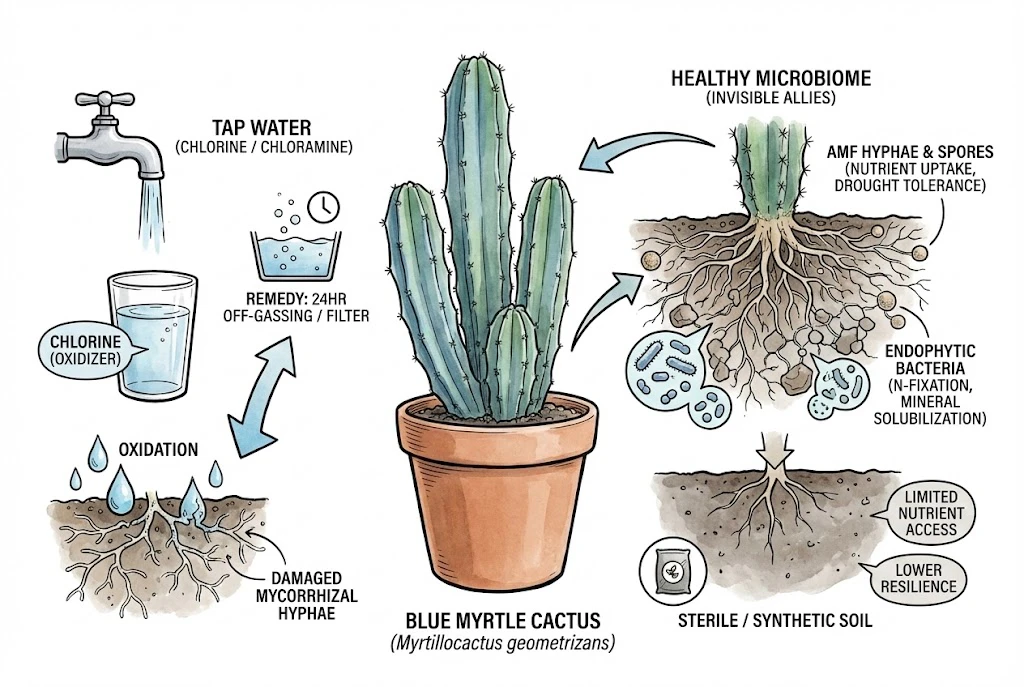
Water quality can gradually affect soil chemistry and the microbial environment within the substrate.
The Chlorine Factor
Municipal water systems often use chlorine or chloramine.
Test water treatment only when needed
In practice, many plants tolerate normal municipal water, but water chemistry varies and sensitive setups can accumulate salts or disinfectant by-products.
Treat chlorine and chloramine as a secondary consideration to test only when the plant, substrate, or local analysis suggests a problem.
Impact
Chlorine is an oxidizer that can damage the hyphae of beneficial fungi.
Remedy
If you want to reduce chlorine, letting water stand overnight can help, but it does not remove chloramine, which many utilities now use instead. Standing water off-gasses chlorine, not chloramine.
A filter specifically rated for chloramine is required when that treatment is actually needed, and for most container cacti this level of intervention is optional.
The Microbiome
M. geometrizans can coexist with a community of microorganisms, but the effect of any inoculant depends on the substrate, water, and existing biology.
Arbuscular Mycorrhizal Fungi (AMF)
AMF associations can support nutrient uptake or drought responses in some desert plants, although colonization varies by species and growing medium.
Do not treat an inoculant as a substitute for sound roots and drainage.
Endophytic Bacteria
Cactus roots and seeds can harbor bacteria, including Bacillus species, that may influence nutrient cycling. The effect depends on the strain and growing conditions.
A modest organic component may support biological activity, but compost or inoculants are optional and should be evaluated against the plant's dry-down and nutrient response.
Pests and Symbiosis (The Scale-Ant Axis)
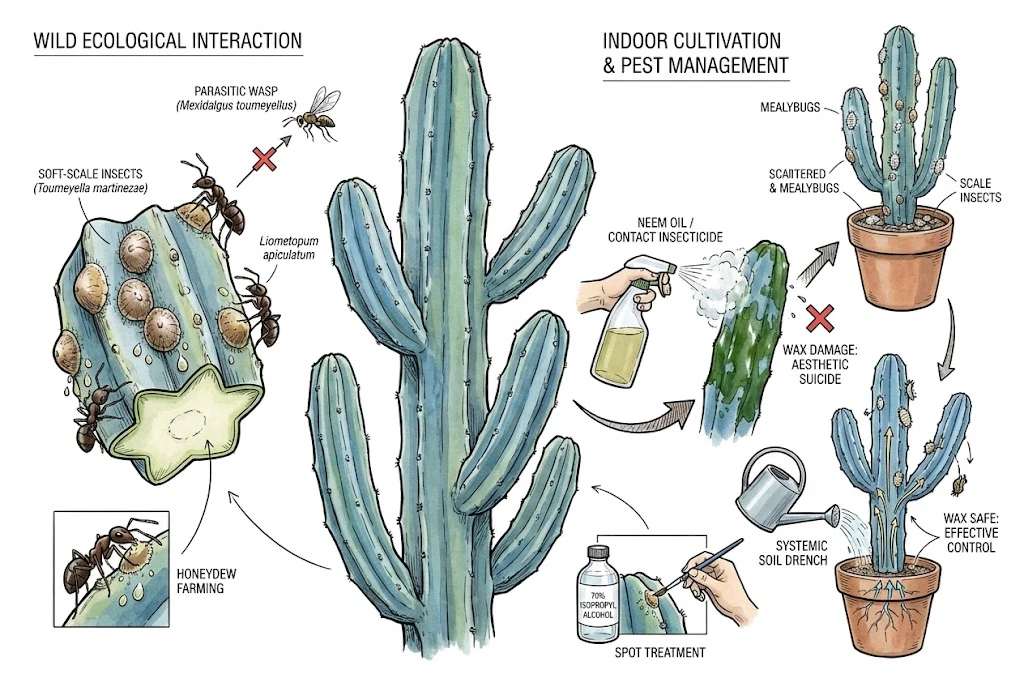
In its natural environment, Myrtillocactus is part of an ecological interaction involving specific pests.
The Scale Insect
The soft-scale insect Toumeyella martinezae is a known parasite of M. geometrizans.
Balance pest control with the bloom
In the wild, ants often protect these insects from predators in exchange for honeydew.
In indoor settings, scale or mealybugs are the primary concern.
The Wax Problem
Contact products and oils can disturb the epicuticular wax and change the plant's appearance.
Test any product on a small, inconspicuous area only when the label permits it.
The Solution
A systemic product may be appropriate for some sap-feeding pests, while a physical or contact treatment may suit others.
Choose the method from a confirmed pest, local registration, plant stage, and label directions rather than assuming one class is always safest.
For a small infestation, careful mechanical removal can be lower-risk than coating the whole plant.
If a labeled alcohol-based product is used, follow its directions, avoid hot or stressed tissue, and confirm that the formulation is suitable for cacti.
Ethnobotany and Future Science (The Garambullo)
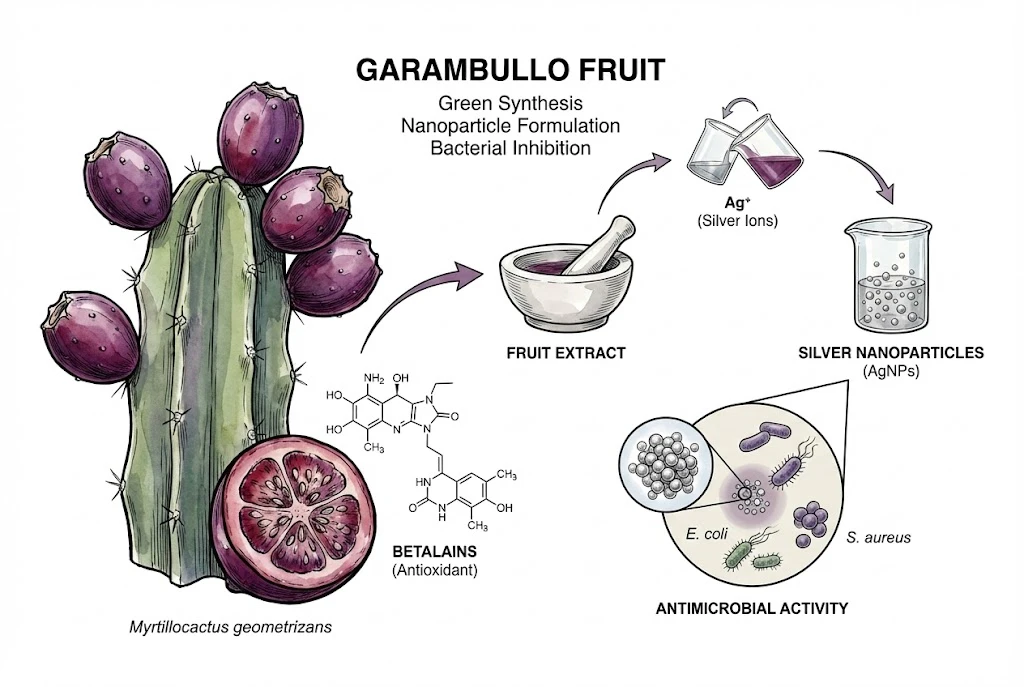
The fruit of the plant, known as garambullo, has notable nutritional and scientific properties.
- The fruit’s purple color is derived from betalains, which are stable antioxidants.
- A 2025 study reported using fruit extract from M. geometrizans to synthesize silver nanoparticles. The phytochemicals acted as stabilizing agents in that experimental process, which reported antimicrobial properties.
The Blue Myrtle Cactus Care Protocol
Maintaining Blue Myrtle Cactus (Myrtillocactus geometrizans) works best when light, drainage, and watering are adapted from its native ecology to the actual container and indoor conditions.
Success comes from matching light, drainage, watering, and pest response to the plant's current growth state and the conditions around the pot.
The Protocol
- Provide the brightest stable exposure the plant can tolerate after gradual acclimation, watching new growth for stretch or scorch.
- Use a stable, open mix and adjust its mineral and organic balance to the pot, climate, and observed dry-down.
- Soak when the root zone has dried to the level appropriate for the current growth and temperature, then allow air back into the mix.
- Avoid touching the surface of the plant to preserve the wax layer.
- Confirm the pest, protect the bloom where possible, and use only a label-compliant treatment that fits the plant and setting.
These principles make the routine measurable without pretending that one light level, recipe, or winter schedule fits every M. geometrizans.