
Agave Care Indoors: Light, Water, Substrate, and Pest Checks
Indoor Agave care based on measured light, observed dry-down, an airy substrate, and pest identification before any label-compliant treatment.
Maya Ellison · 2026-01-13 · Updated 2026-01-30 · 15 min read
Key Takeaways
- Indoor Agave need enough usable light to stay compact. Measure or compare light in your setup and increase it gradually without treating one DLI or fixture distance as universal.
- Use a stable, well-drained substrate matched to the pot and root mass. Coarse mineral components can help, but no fixed percentage or particle size fits every Agave.
- Many Agave use CAM, yet stomatal timing and drought responses vary. A cooler night may help some plants, but temperature alone does not determine care.
- Water after the root zone has dried enough for that pot and plant. Do not require bone-dry media or a particular leaf wrinkle before every watering.
- Identify pests before treating. Use clean tools and follow current pesticide labels, PPE, and crop restrictions. Avoid improvised alcohol, oil, or peroxide recipes.
The Mechanics of Crassulacean Acid Metabolism in Indoor Environments
Start with CAM timing
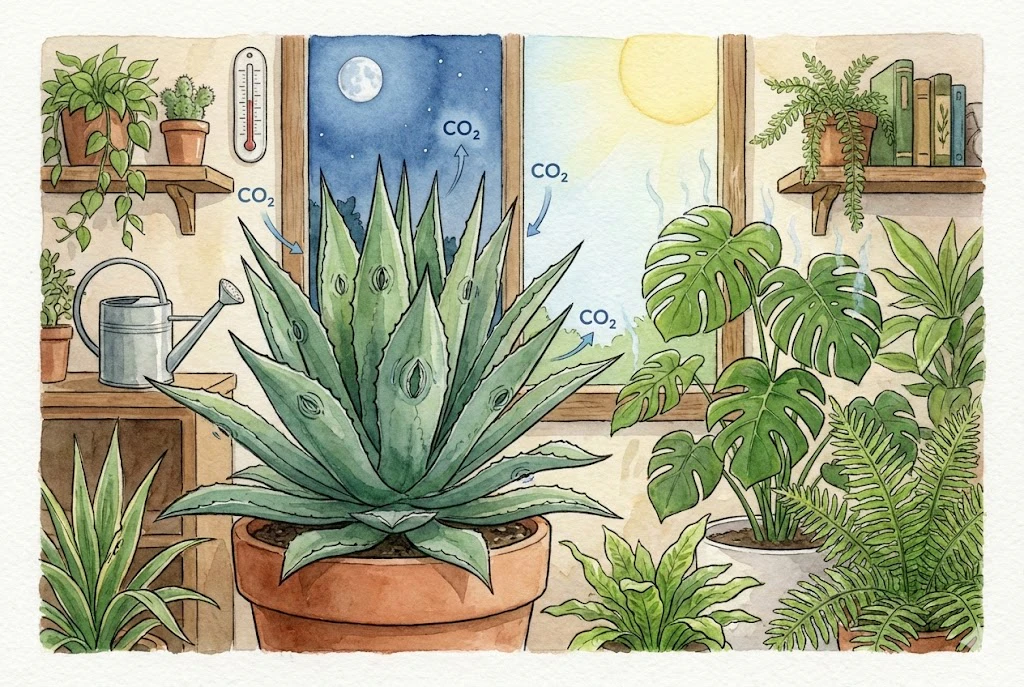
Growing Agave indoors is a negotiation between what the plant evolved to do and what homes provide. Many cultivated Agave use Crassulacean Acid Metabolism (CAM), but the timing and strength of that pathway vary by species, hybrid, water status, and environment.
Most common houseplants use the C3 pathway and open their pores during the day, while Agave separate gas exchange from light capture and commonly take in CO₂ at night for daytime photosynthesis. CAM provides useful context, but light, roots, substrate, temperature, and pests still determine the practical care decision.
The Circadian Regulation of Gas Exchange
An internal circadian clock controls when the stomata (the leaf pores) open and close, and genomic work on CAM model species backs this up.
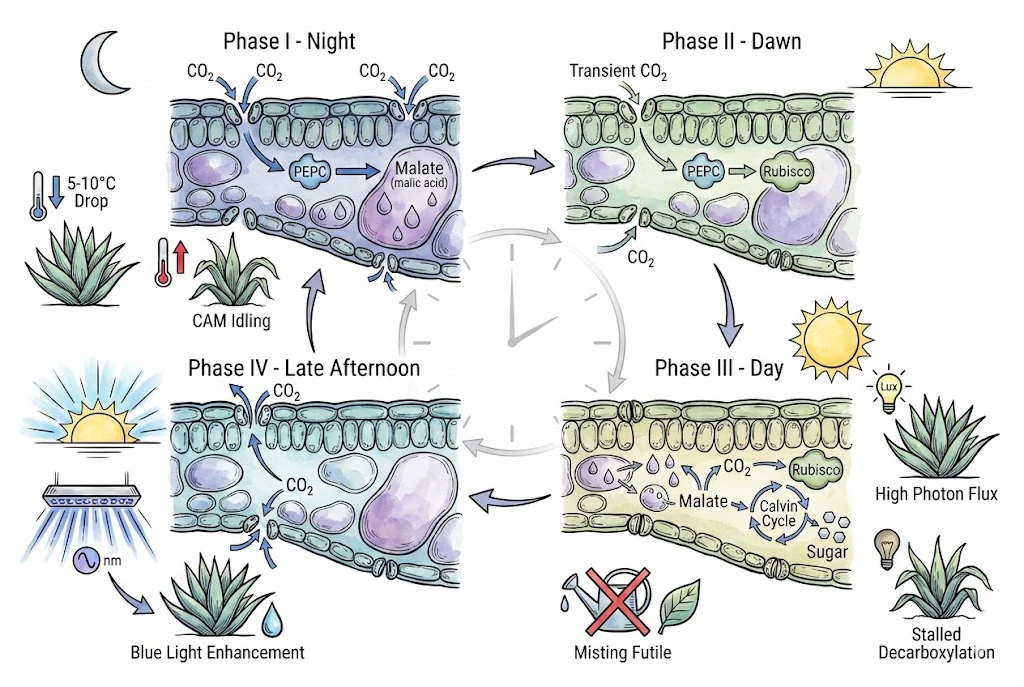
That rhythm splits the plant’s day into a few distinct phases, each of which wants slightly different conditions.
Indoors, temperature and humidity often stay flatter than outdoors, so the plant may receive weaker cues.
Any effect on efficiency depends on species and the rest of the setup.
Phase I Nocturnal Acidification (Dark Period)
After dark, the stomata open and take in atmospheric CO₂. An enzyme called PEPC fixes it into malic acid, which the plant stores in central vacuoles.
This phase is temperature-sensitive. Many CAM plants take up more CO₂ on cooler nights, while consistently warm nights can reduce uptake, but no specific cutoff is universal.
CAM idling literature mainly links the response to severe, prolonged drought rather than simply to a warm bedroom. A modest night-time drop may suit some Agave and resemble native conditions.
Phase II The Dawn Transition (Early Morning)
At first light there is a brief surge of stomatal opening as the plant hands off from PEPC-driven uptake to Rubisco-driven fixation.
Phase III Diurnal De-Acidification (Light Period)
During daylight, stomatal conductance is often lower in CAM plants, but it is not permanently zero. The malic acid stored overnight is broken down, releasing CO₂ inside the leaf, and the magnitude of daytime fixation depends on species, light, and water status.
Daytime misting or foliar feeding is not a substitute for root-zone care. Light remains a major limit, and without enough of it an Agave cannot build much sugar, so low-light plants grow weak and stretched over time.
Phase IV The Blue Light Anomaly (Late Afternoon)
Classically, the stomata can reopen in the late afternoon if the plant has water to spare.
There is also some preliminary evidence that Agave hybrids are unusually sensitive to blue light at this time of day.
Interpret the blue-light finding cautiously
A 2025 study, first posted as a preprint and later published in a peer-reviewed journal, reported that high-intensity blue light in the late afternoon raised stomatal conductance and roughly doubled photosynthetic rate in one Agave hybrid. Morning blue light had little effect in that experiment.
The study used a single greenhouse-grown hybrid and short controlled light steps. It is a promising lead, not a proven lighting recipe for every Agave in a dry living room.
Spectrum and intensity both matter, but one hybrid study does not establish a blue-light recipe for every Agave. Compare the fixture’s measured output with the plant’s response in your own space.
The Hydraulic Dilemma (Temporal Water Uptake)
Prioritize rot avoidance indoors
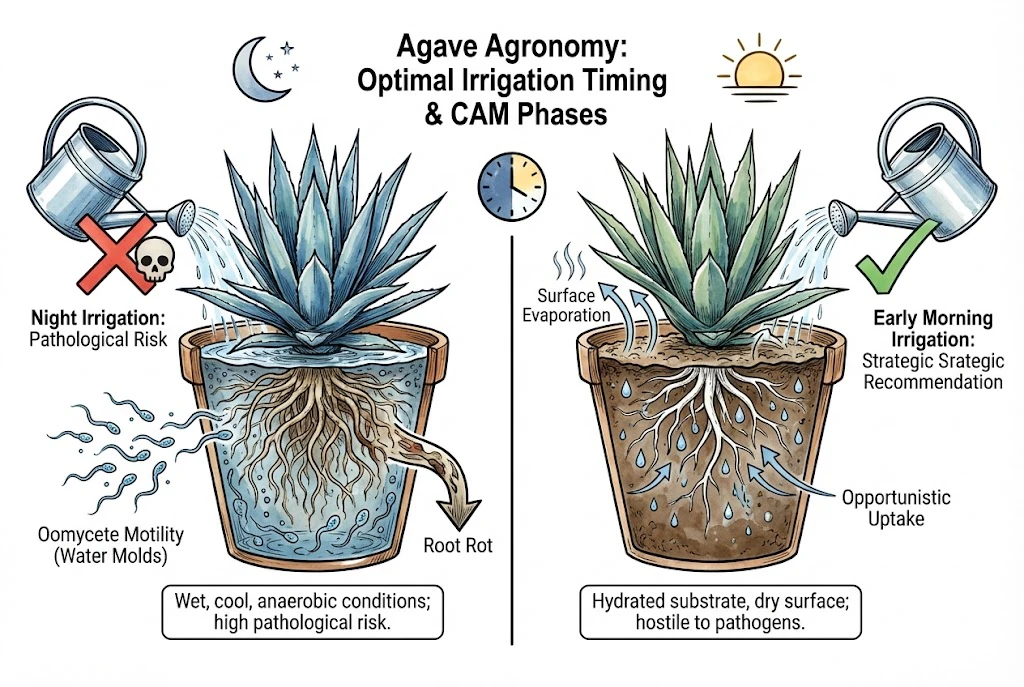
There is a long-running argument about watering relative to the CAM cycle. Although stomata often open at night, roots can absorb opportunistically at any hour, so the practical trade-off is small uptake efficiency versus rot risk.
For a potted Agave indoors, avoiding rot is usually more important. Watering earlier in the day gives the surface and upper mix daylight hours to dry, but drainage, aeration, temperature, and existing wetness control risk more than the exact hour. If a healthy plant needs water, water it when convenient.
Photometric Engineering (Quantifying the Indoor Solar Deficit)
Measure the shelf before adding a fixture
A common cause of weak, stretched Agave indoors is simply not enough light.
Outdoor desert light is much stronger than most rooms, but the DLI reaching one indoor plant depends on latitude, window, season, shade, and fixture.
A dim room may support survival without compact growth. Measure or compare the actual shelf before choosing supplemental light.
The Daily Light Integral (DLI) Thresholds
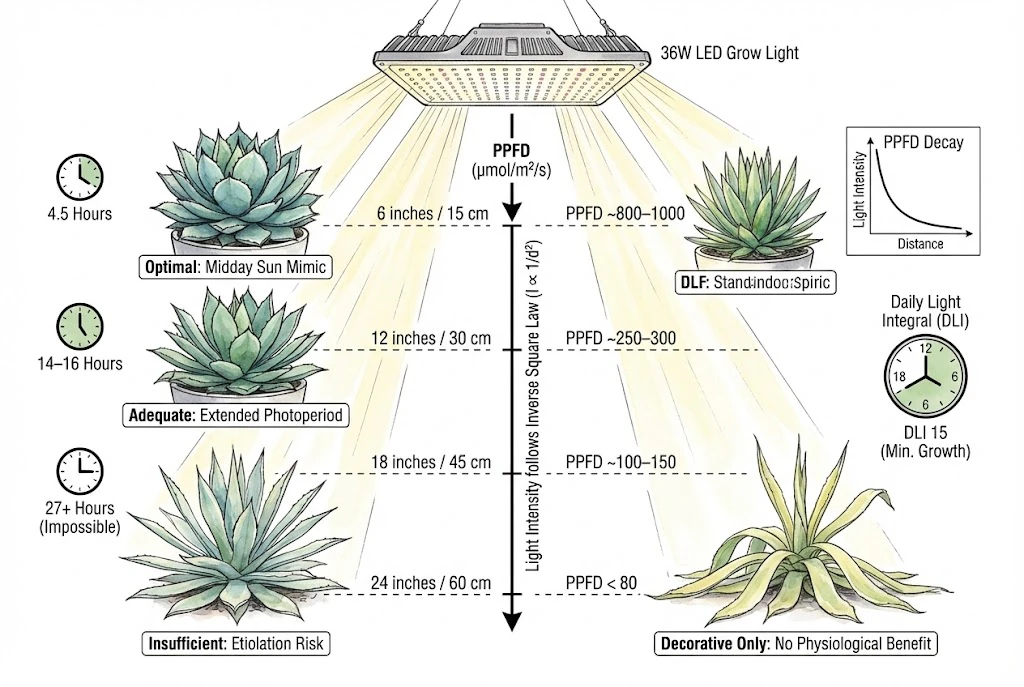
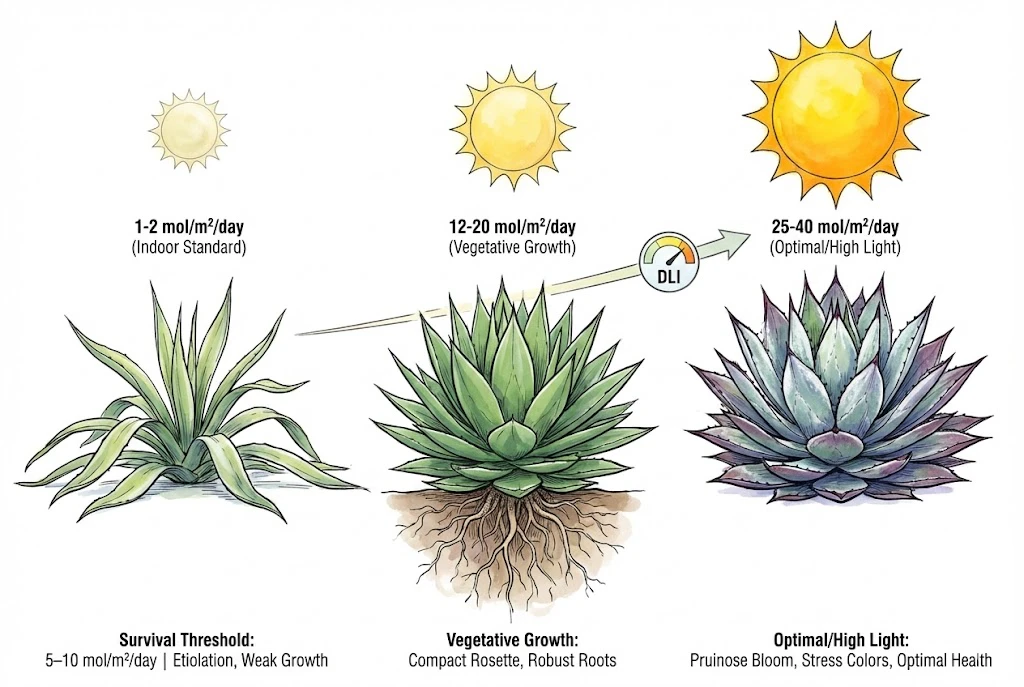
Use DLI as a planning range
DLI combines PPFD and photoperiod. Use published ranges as starting context, not as guaranteed survival or growth thresholds for every species and hybrid.
- Lower light may maintain a plant but can produce slower or less compact growth.
- Moderate light often supports active growth when temperature, water, and roots are also suitable.
- Higher light can improve compactness or color in some plants, but it raises heat and acclimation demands.
A dedicated full-spectrum LED fixture may be needed in a dim room. A compact bulb-style grow light is one option when its measured output suits the shelf. If you are weighing fixtures, it helps to choose a grow light by measured PPFD and DLI rather than by wattage alone.
Check the current PPFD map, coverage, heat, and mounting distance before deciding that it will provide enough light.
The Inverse Square Law and Artificial Lighting
With LEDs, the distance between the bulb and the plant is one major variable you control.
Distance changes the measured load
A point-source approximation follows the inverse square law. Intensity drops with the square of distance.
Real fixtures have optics and spread, so use a measured PPFD map when available rather than treating the formula as exact.
Case Study 36W Full Spectrum LED Bulb
| Distance from source | Illustrative PPFD (μmol/m2/s) | Approximate hours for DLI 15 | How to read it |
|---|---|---|---|
| 6 inches (15 cm) | ~800–1000 | About 4.5 hours | High load. Check leaf temperature and airflow. |
| 12 inches (30 cm) | ~250–300 | About 14–16 hours | May suit maintenance in some setups. Verify the fixture. |
| 18 inches (45 cm) | ~100–150 | More than a typical photoperiod | May be limiting for compact growth. |
| 24 inches (60 cm) | < 80 | Not practical to infer | Likely low for demanding growth. Measure before deciding. |
The table above is a rough model, not measured values for your setup. Real PPFD depends on the fixture's reflector, the area you are covering, and nearby walls, so a light meter or the manufacturer's PPFD map beats point-source math.
This bulb's published output at 12 inches is closer to about 265 PPFD than 300. Reaching a DLI of 20 at that distance would take about 21 hours, which is longer than practical.
A single bulb at 12 inches is therefore better suited to maintenance than to pushing high growth. To reach a higher DLI, move the light closer while watching for heat or use a stronger fixture.
The Unreliability of Consumer Lux Meters
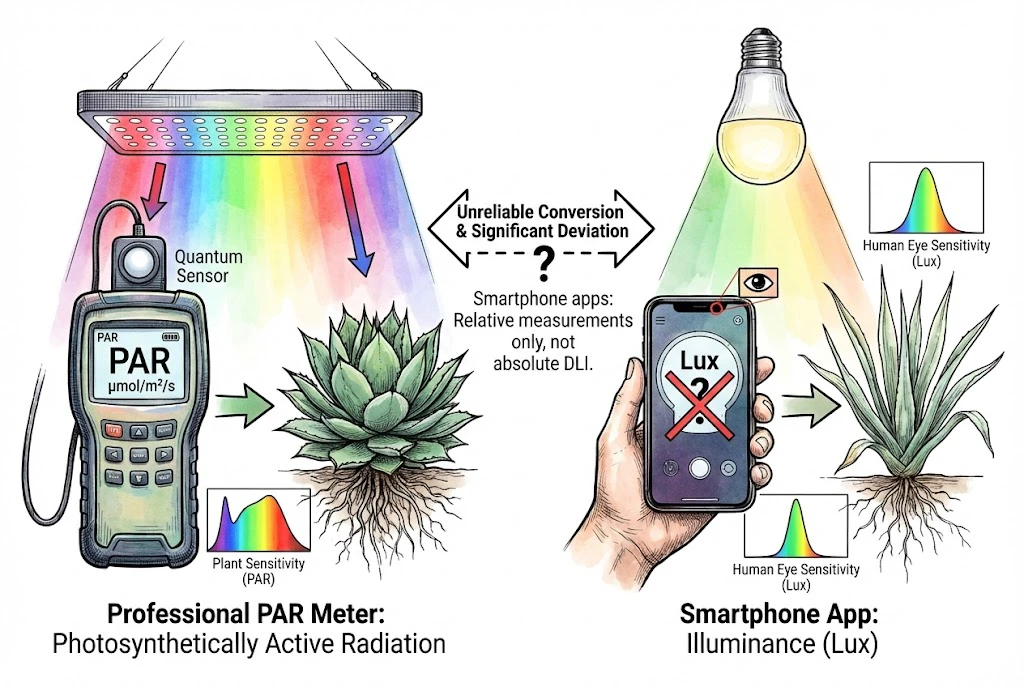
People often try to measure light with a smartphone app that reads the phone’s ambient sensor or camera. Those apps report illuminance, which is weighted to human vision and peaks at green, while plants use the whole 400–700 nm PAR band.
Green light still penetrates leaves and drives photosynthesis, so total PAR and distribution matter rather than red and blue alone.
Conversions exist, but phone hardware varies enough that absolute readings are not trustworthy and different models can disagree widely. Use a phone app only for relative comparisons across a shelf, not for setting an absolute DLI target.
Edaphic Factors (Substrate Physics and Porosity Engineering)
Build the mix around drainage and air
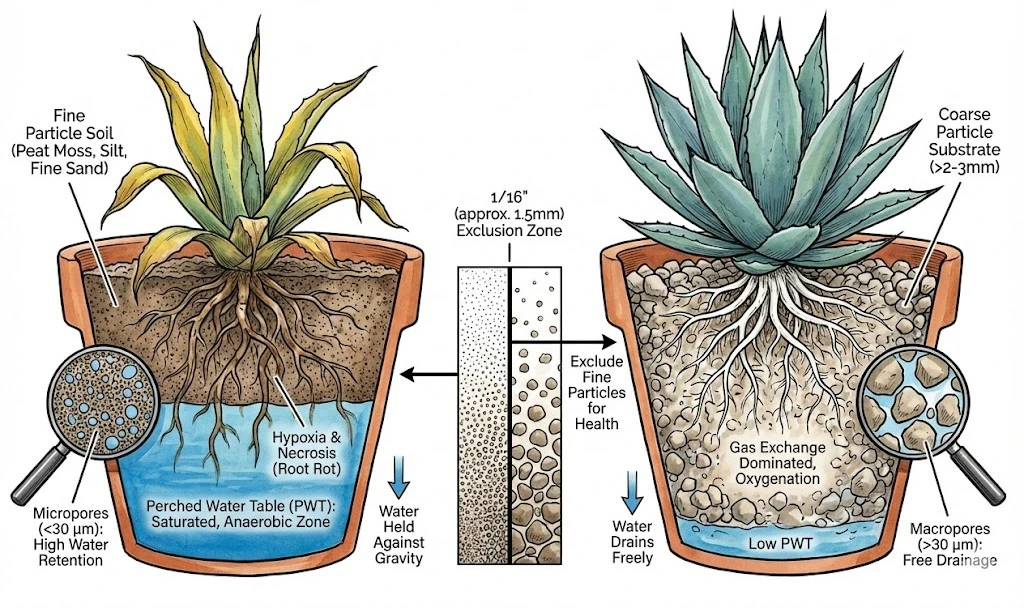
Persistent saturation and poor aeration increase root-disease risk, but disease also depends on pathogen, roots, temperature, injury, and duration. Use a mix that drains and re-oxygenates for the actual container instead of assuming one cause from a soft leaf.
In a pot, gravity is opposed by capillary action, leaving a saturated layer at the bottom called the perched water table, or PWT.
The Physics of Particle Size Distribution (PSD)
How tall that saturated layer sits is inversely related to the size of the pores in the mix.
- Micropores under about 30 µm are made by fine materials such as peat, silt, and fine sand. They hold water against gravity, keeping the PWT tall and the soil airless.
- Macropores over about 30 µm are made by coarse particles above 2–3 mm. They drain freely and fill with air.
To improve air exchange, reduce fines and compaction when the finished mix stays wet too long.
There is no universal screen size. Pot height, component shape, organic fraction, and watering method all matter.
A bagged, pre-screened pumice is one coarse component to evaluate. Its particle distribution and water retention still need to be tested in the finished mix and pot.
Situation-Specific Substrate Recipes
Bagged cactus mixes vary widely. A mix that stays wet or collapses into fines needs adjustment, but peat is not automatically harmful in every pot and climate.
Build or amend a mix to match the specific species, pot, light, and drying pattern, then monitor it rather than following a fixed recipe.
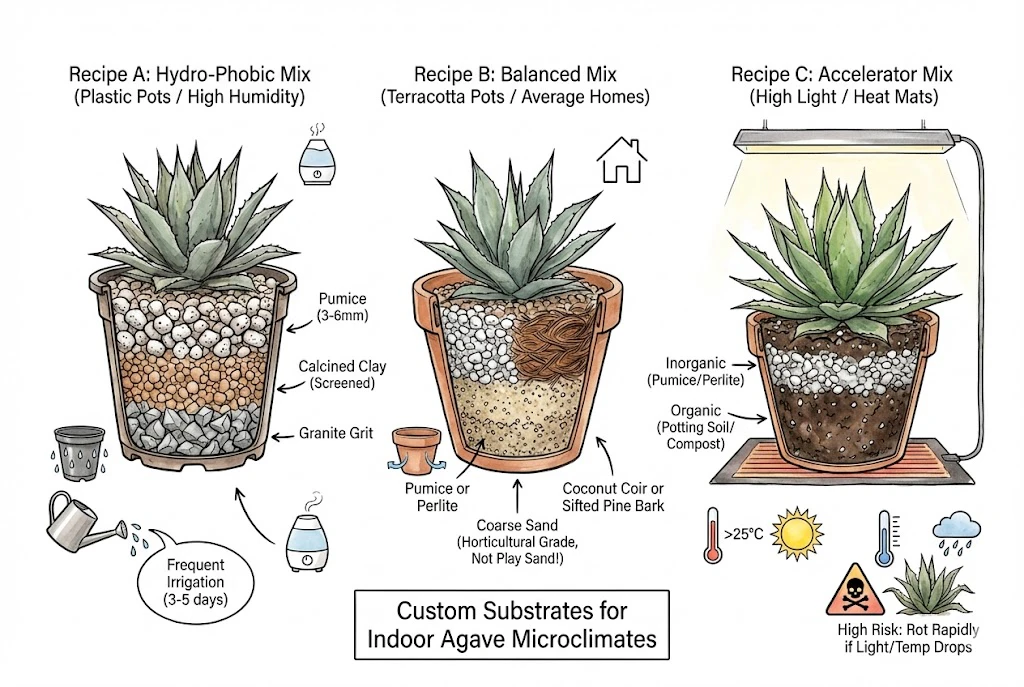
Recipe A. Hydro-Phobic Mix (For Plastic Pots / High Humidity Areas)
Plastic pots do not wick through their walls, so the finished mix and airflow must provide the needed drainage. Humidity and pot size change the result.
Use coarse mineral components with limited fines, but select proportions by observing drainage and dry-down in the actual pot. Calcined clay, pumice, and grit differ in water retention and density.
Recipe B. The Balanced Mix (For Terracotta Pots / Average Homes)
Terracotta wicks moisture out, so a small organic fraction can buffer nutrients and water in some homes. Keep sand coarse and use only as much organic material as the plant and drying pattern can support.
Recipe C. The Accelerator Mix (High Light / Heat Mats)
Warm, bright conditions can increase water use, but do not assume that a high-organic mix is safe. Test moisture and root oxygen before increasing organic content.
Hydrology and Nutritional Physiology
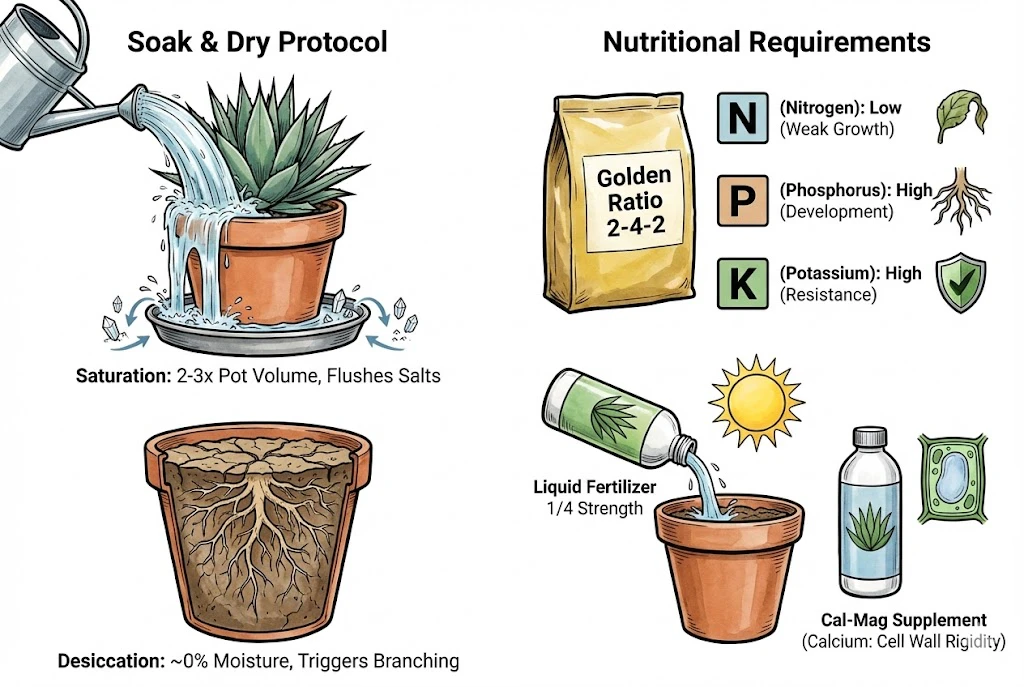
The Soak and Dry Protocol vs. Continuous Moisture
Many Agave tolerate a thorough watering followed by a dry-down, but the suitable cycle depends on species, pot, substrate, roots, and season.
- Water the root zone evenly and allow excess to drain. Use enough to reach the container’s full root volume rather than a fixed multiple.
- Let the mix become appropriately dry for the plant and pot before watering again. Avoid prolonged saturation without requiring every Agave to reach zero moisture.
Repeated saturation is a risk factor, but watering needs to be matched to actual moisture and plant response.
Nutritional Requirements and NPK Ratios
Agave grow slowly, but they are not zero-input plants. In the wild they tap mineral-rich soils, while an inert mix such as Recipe A requires the grower to supply those minerals.
Replace minerals with measured nutrition
- Use a complete fertilizer at the current label rate only during active growth. Avoid assuming that low nitrogen or extra phosphorus prevents disease.
- Check source-water alkalinity and salts before adding supplements. Distilled or rainwater may require a complete nutrient program, but the need is species- and substrate-dependent.
Pathology (Biotic Stressors and Advanced Diagnostics)
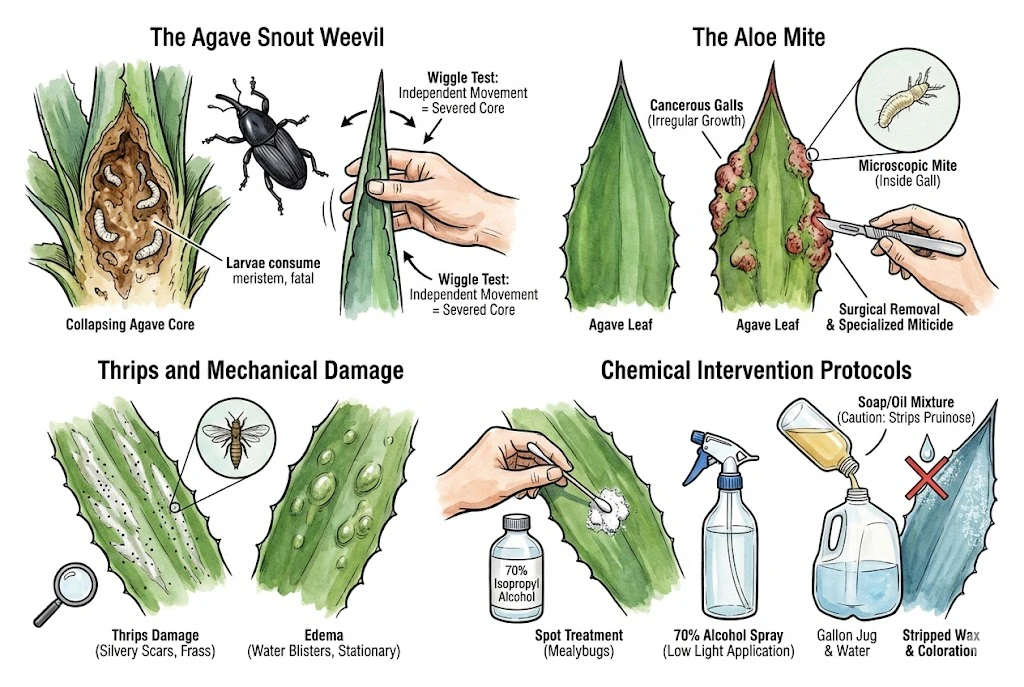
An indoor Agave is a small ecosystem. Once it is stressed by its environment, pests move in, so identify the pattern before treating.
The Agave Snout Weevil (Scyphophorus acupunctatus)
The agave snout weevil can damage the crown, but similar collapse can arise from rot, physical injury, or other pests. Confirm the signs before treating.
- Look for crown damage, galleries, frass, adult insects, or progressive collapse. A loose central spear is a clue, not proof.
- Isolate the plant and consult local extension or label guidance. Systemic products require crop authorization, PPE, and timing that vary by jurisdiction.
The Aloe Mite (Aceria aloinis)
Eriophyid mites can cause distorted growth in Aloe and related hosts, but a diagnosis on Agave requires confirmation because several stresses produce galls or deformity.
- Look for irregular, warty lumps or galls. Unlike mealybugs, you can’t wipe these off.
- Isolate and seek an identification before pruning or applying a miticide. Use only a product labeled for the plant, pest, site, and application.
Thrips and Mechanical Damage
Thrips rasp open surface cells to drink sap, leaving silvery, scarred patches.
- Look for silvery streaks or stippling, with tiny black specks of frass on the undersides.
- Edema produces raised bumps or sunken spots after swings in humidity or temperature and stays put. Thrips damage spreads and looks scratched.
Chemical Intervention Protocols
For visible soft-bodied pests such as mealybugs, use a spot treatment only when the product label and plant tolerance allow it.
- Apply the permitted product only to the target insect and follow its label. Do not generalize a contact treatment to the whole plant.
- For heavier infestations, use a product labeled for the pest and Agave, following PPE and phytotoxicity directions. Do not improvise a whole-plant alcohol spray.
- Use only a labeled soap or oil formulation and test cautiously. Waxy leaves can be sensitive, and home recipes are not standardized.
Recovery Protocols (The Emergency Room)
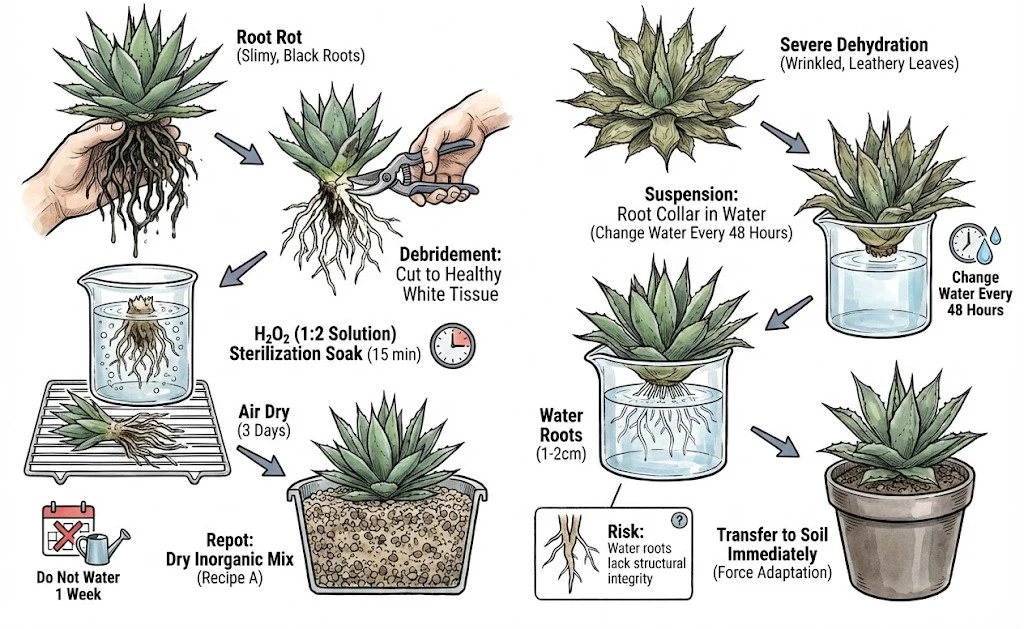
The Hydrogen Peroxide Root Rescue
When roots are slimy, black, and smell of decay, confirm the wider pattern before deciding that rot is present.
- If rot is confirmed, remove contaminated medium and compromised roots conservatively with clean tools. Healthy tissue is not always white, so do not use color alone as a diagnostic.
- Some growers rinse cleaned roots with dilute hydrogen peroxide. If you do, keep it weak and brief. Hydrogen peroxide is a strong oxidizer that can damage living root tissue, and no well-established concentration or soak time makes it a proven root-sterilizing cure.
- Let wounds dry in clean, airy conditions, then use a suitable dry medium. Rewatering depends on wound size, remaining roots, temperature, and plant response. No fixed waiting period is universal.
Water Therapy (Mechanism and Controversy)
Standing a badly dehydrated succulent in water is contentious but can work.
- Contact with water can rehydrate dry roots, but uptake and recovery depend on root condition and the medium.
- Roots formed in water may lack the structure of soil roots and may die when transplanted.
- Water therapy is an experimental rescue option with contamination and transition risks. Do not use a fixed water-change interval or root-length threshold. A plant-health professional can help decide whether controlled rehydration is safer.
Watering (Recognizing Thirst)
Read the plant before the calendar
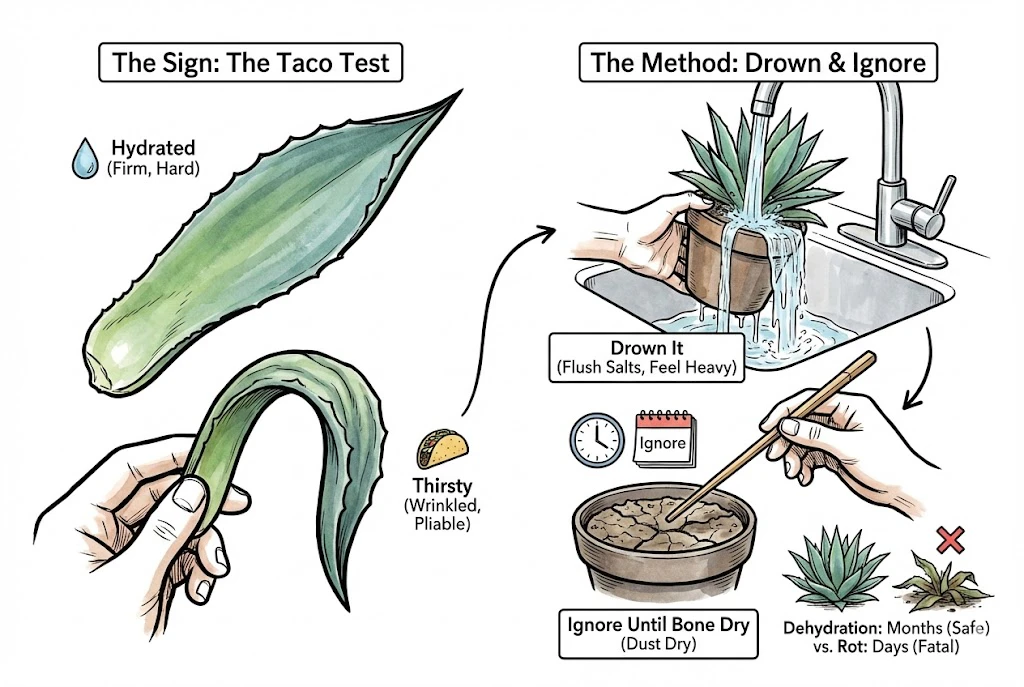
Do not water on a fixed schedule because conditions change week to week. Agave store water in their leaves, which are firm and rigid when hydrated and may become slightly wrinkled or pliable when the plant needs water.
When you water, wet the root zone evenly and allow drainage. Recheck the mix before the next application and adjust for the actual pot rather than requiring complete dryness in every case. Many Agave tolerate dry periods better than persistent wet media, but species and root condition still matter.
To make those changes comparable, I choose one leaf as the twelve-o’clock reference and photograph the rosette from above and from the side before changing water. The paired entry includes pot mass, the number of newly yellowed or softened lower leaves, and moisture at the marked probe depth. Gradual shifts in leaf angle or firmness then remain visible without repeatedly flexing the same leaf.
I make the next comparison when the pot returns within 2 percent of its recorded pre-watering mass and the marked probe depth again reads dry. The two-percent band is my allowance for scale noise and plant growth, not a universal Agave threshold. Matching both conditions prevents a warmer or partly wet pot from creating a false comparison.
A slightly less rigid lower leaf can reflect ordinary water use. A newly soft central area or a wet pot that stays heavy calls for a different response. The record gives me useful history before I blame one symptom on thirst or rot.
Common Issues and Fixes
| The look | Possible explanation | First check |
|---|---|---|
| Mushy, yellow lower leaves | Persistent moisture, root damage, or another stress | Check the root zone, firmness, smell, and dry-down before repotting. |
| Brown, crispy tips | Salt or fluoride stress, dry air, heat, or other causes | Review source water, EC, light, and recent changes before switching water. |
| White cotton-like substance | Possible mealybug infestation | Confirm the insect, isolate the plant, and use a labeled treatment if needed. |
| Wrinkled, shriveled leaves | Dehydration or impaired roots | Compare soil moisture and root condition before watering deeply. |
| Tall, pale, stretched center | Insufficient light or excess warmth | Increase light gradually and monitor heat before relocating. |
Inspect early when rot is suspected
Earlier assessment can improve the options when rot is suspected, but a soft center is not a diagnosis by itself.
Check the firmness of the central spire and the base when practical and compare it with moisture, smell, and recent conditions.
Patience Is Most of Agave Care
Agave are slow plants, and patience is most of the job. If yours looks stable, continue observing its growth, dry-down, and root-zone condition before changing the setup.
Strong suitable light, a well-drained mix, and watering matched to the plant provide a useful baseline, while species and indoor conditions determine the details.