
Winter Growing Othonna & Tylecodon Care Tips
Care for winter-growing Othonna, Crassothonna, and Tylecodon with seasonal watering, bright light, gritty soil, species checks, and toxin awareness.
Maya Ellison · 2026-02-02 · Updated 2026-03-04 · 10 min read
Key Takeaways
- Confirm your exact species before setting a care schedule. Tylecodon is largely winter-growing and summer-deciduous, but Othonna (including plants now in Crassothonna) spans both winter- and summer-rainfall regions, so not every one is a winter grower.
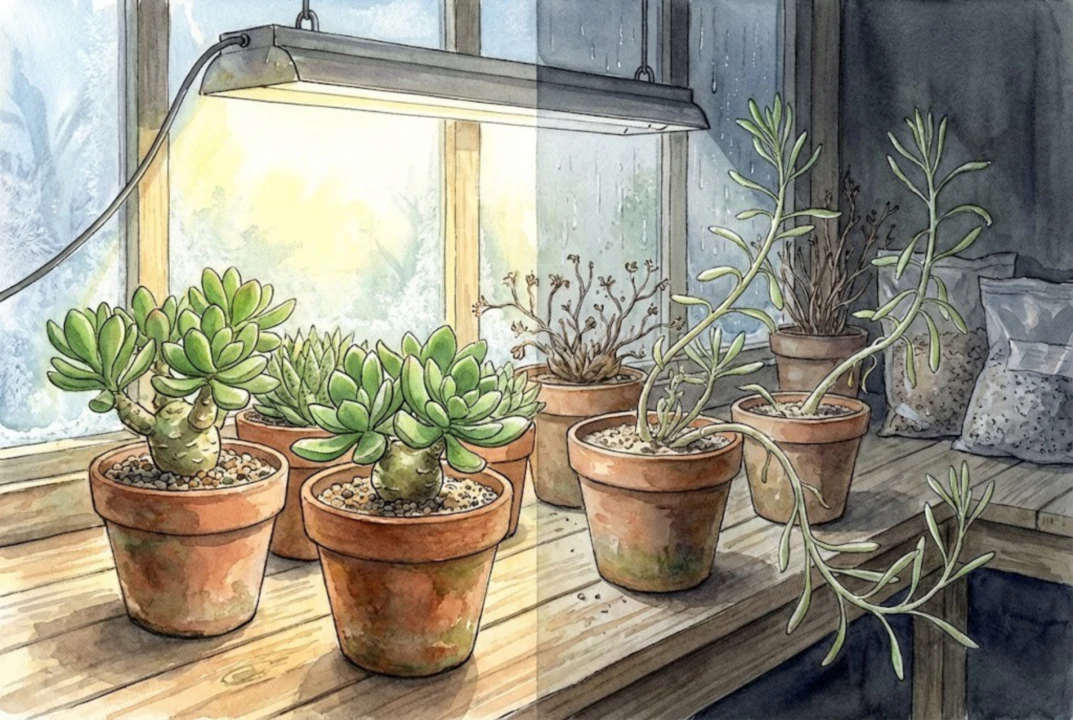
- Give them strong light and supplement weak winter windows with an LED. Most want bright light for compact growth, and thin indoor light makes stems etiolate into weak, stretched growth.
- Water on the plant’s growth signal, not the calendar. Start cautiously when new leaves push in late summer or autumn, water thoroughly with a real dry-down in active growth, and give little or none during the hot rest.
- Use a gritty, fast-draining mineral mix and a pot matched to your dry-down. Wet, cool, and dormant is the reliable rot pattern, so keep the resting root zone mostly dry.
- Treat Tylecodon as toxic and prevent ingestion. Its bufadienolides cause krimpsiekte in livestock, so handle sap with gloves and keep every part away from children, pets, and livestock.
What Defines a Winter Grower?
A winter grower generally vegetates through the cooler, brighter part of its local cycle and rests during the hotter, drier part, reflecting the winter-rainfall regions where many of these species occur.
Confirm the Species Before Changing Care
Apply this schedule only to the winter-growing species in these genera. Tylecodon is largely winter-growing and summer-deciduous, but Othonna, including species now placed in Crassothonna, spans both summer- and winter-rainfall regions. Not every Othonna is a winter grower. Confirm your specific species, then follow its actual growth cycle. For a genuine winter grower, the counter-seasonal cycle is an important starting point for care decisions.
Why do they grow in winter?
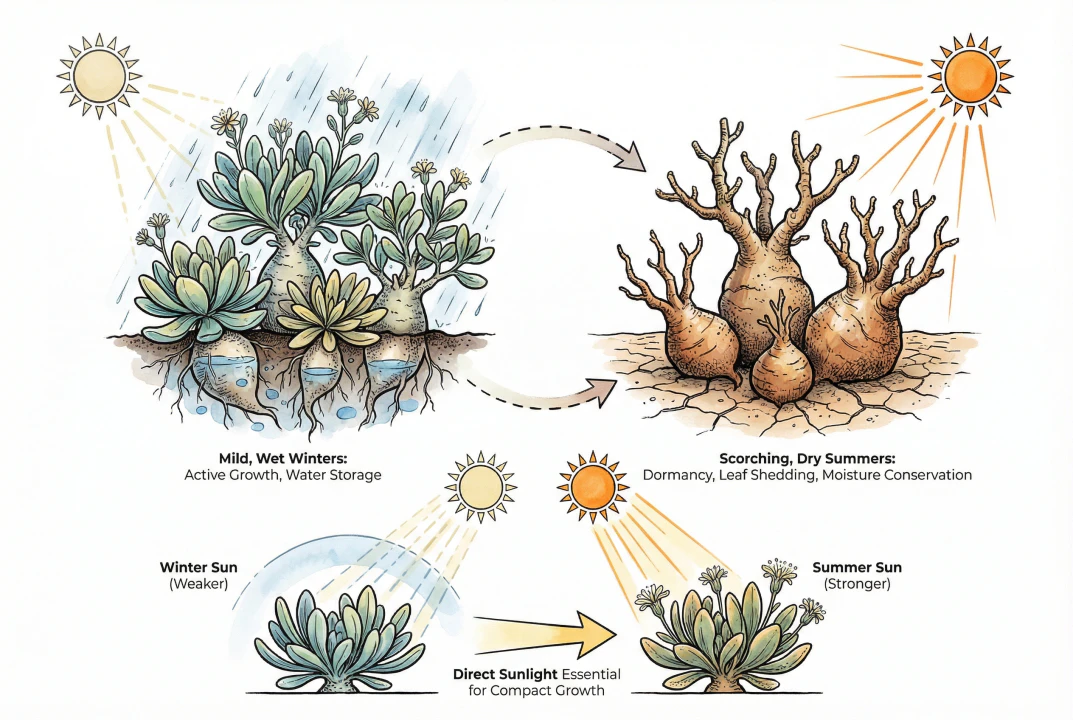
Many winter growers are adapted to use moisture and light during the cooler season and reduce activity during hot, dry periods. Leaf drop and stored water can be part of that strategy, but the timing and intensity vary by species.
How Much Light Do They Need?
Most of these plants want plenty of bright light for compact growth, and many take direct sun. This varies by species, since some Tylecodon are grown in dappled shade. Match the exposure to your plant and acclimate gradually rather than assuming full sun for all.
Acclimate From the Actual Starting Light
Winter light in the Northern Hemisphere is often lower, and window glass reduces it further, so a window that looks bright can still be limiting. Increase exposure in stages and watch for bleaching or heat stress. The acclimation period depends on the starting light and the species.
Can they grow in low light?
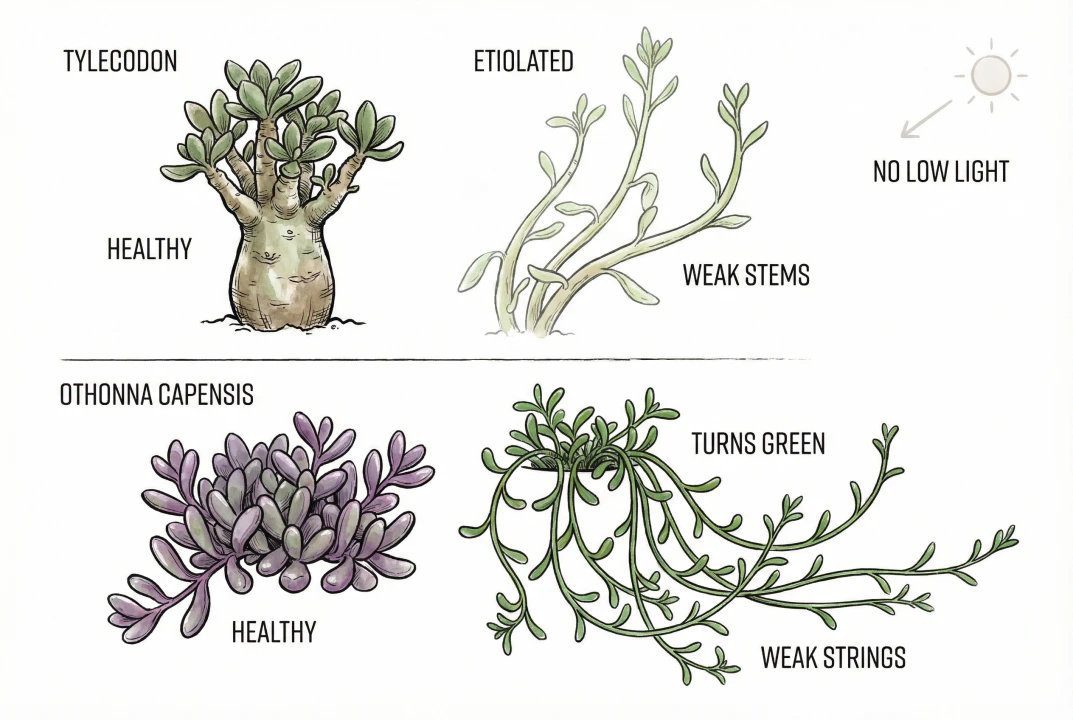
Expect stretching when light is weak
Generally not well. In too little light, many of these plants etiolate. Tylecodon stems can go weak and spindly, while trailing Othonna, including the plant now called Crassothonna capensis, may lose its purple color, turn green, and stretch into thin strings. Color and stretch also depend on temperature and feeding, not light alone. Already-stretched growth stays stretched, though new growth under enough light can be more compact.
Do I need grow lights?
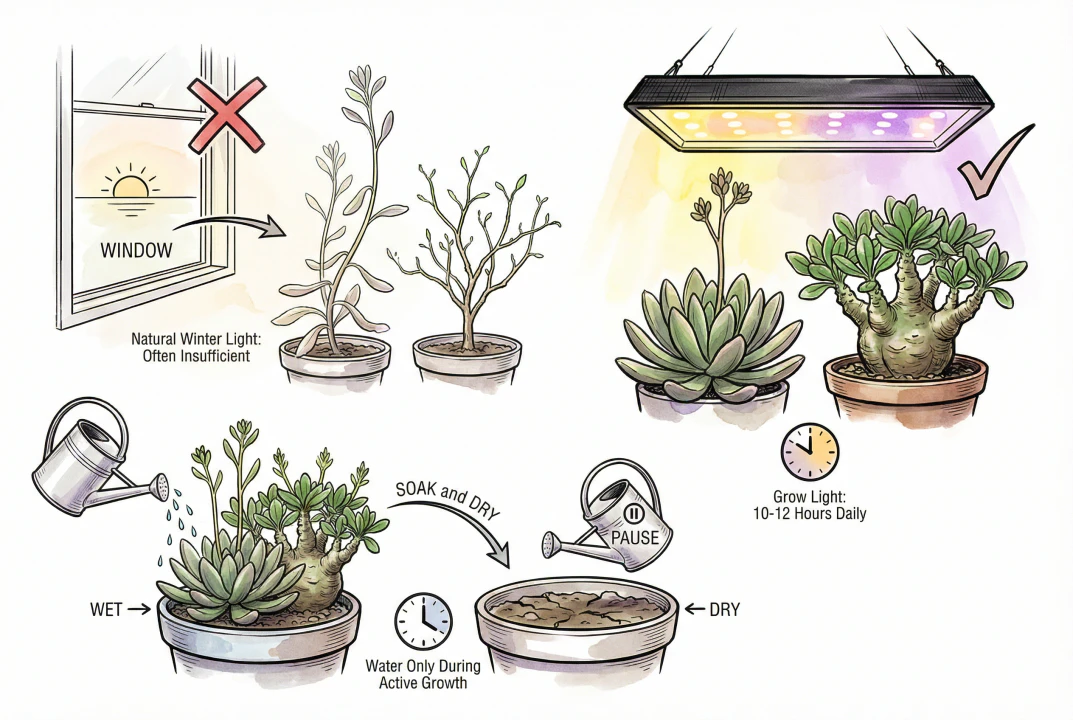
Often, yes. Unless you have a very bright, unobstructed window, indoor winter light can be too weak to keep these plants compact. A full-spectrum LED can supplement the window, but intensity and run time should be set from plant response and, if possible, a light measurement rather than a universal clock.
Optional equipment
For a single plant or a small shelf, a compact full-spectrum LED panel can work. Mounting height and run time are not one-size-fits-all. A powerful panel too close can cause bleaching, while a shelf edge gets much less light. Check the light at the plant with a meter if you can, then dim or raise the panel and increase intensity gradually rather than starting at full power above the plant. If you are still deciding on a fixture, it helps to choose a grow light by measured PPFD and DLI.
When and How Should You Water?
Water primarily while they are actively growing, then reduce frequency as the plant enters rest. The transition is gradual for some species, so use new growth, pot weight, and medium moisture as cues.
A thorough watering followed by a meaningful dry-down is a useful default for a free-draining mix, but the medium does not need to reach a universal percentage of dryness. Adjust the interval to roots, pot size, airflow, and species.
How do I know when to start watering?
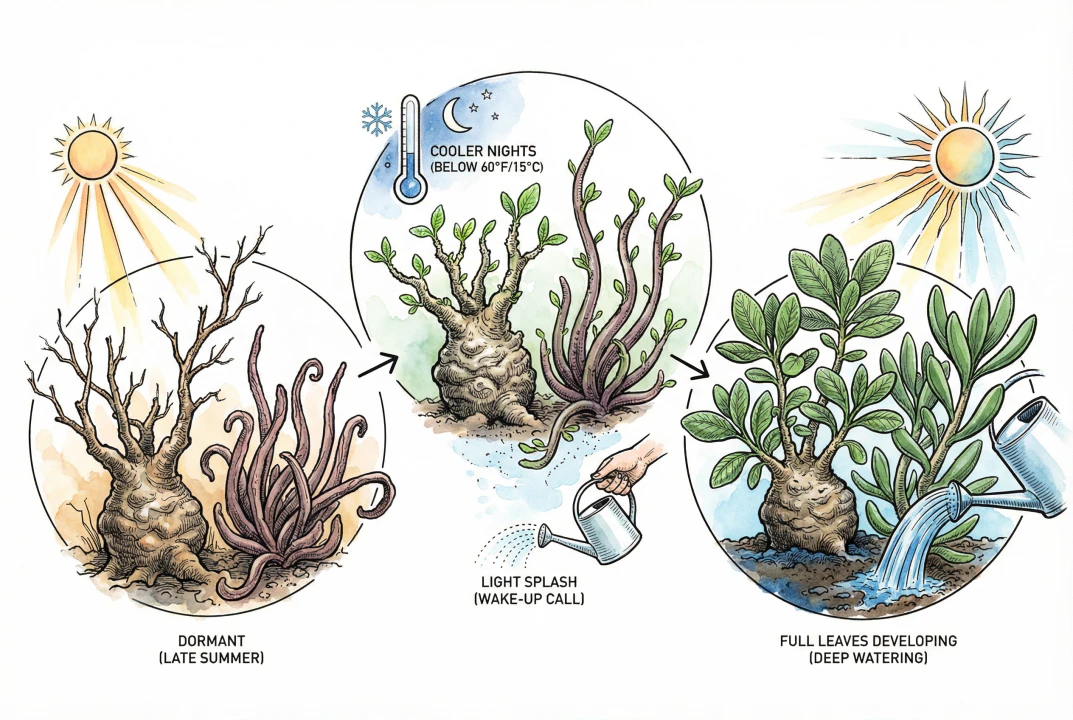
Wait for a local growth signal
Look for the first leaf signal in late summer or early autumn. As nights cool and days shorten, tiny green leaves may push out of seemingly dead stems. New leaves are often more informative than a specific temperature because the wake threshold varies by species and conditions. Let the plant, not a fixed number, guide the first watering.
Start cautiously when new leaves and suitable conditions appear, then increase to thorough watering as active growth becomes clear. Do not force water into a plant that has not resumed growth.
My shelf uses a two-sided tag for plants with opposite seasonal rhythms. The blue side faces out for winter-active pots and the tan side for resting pots. Three boxes track visible leaves, extending tips, and pot mass lost during 24 hours after a post-watering measurement taken following 30 minutes of drainage.
The tag changes sides only after two checks seven days apart confirm the state has changed. This keeps me from copying a neighboring summer grower’s schedule but is not a dormancy test. Soft tissue still prompts immediate inspection rather than waiting for the second check.
What happens if I overwater?
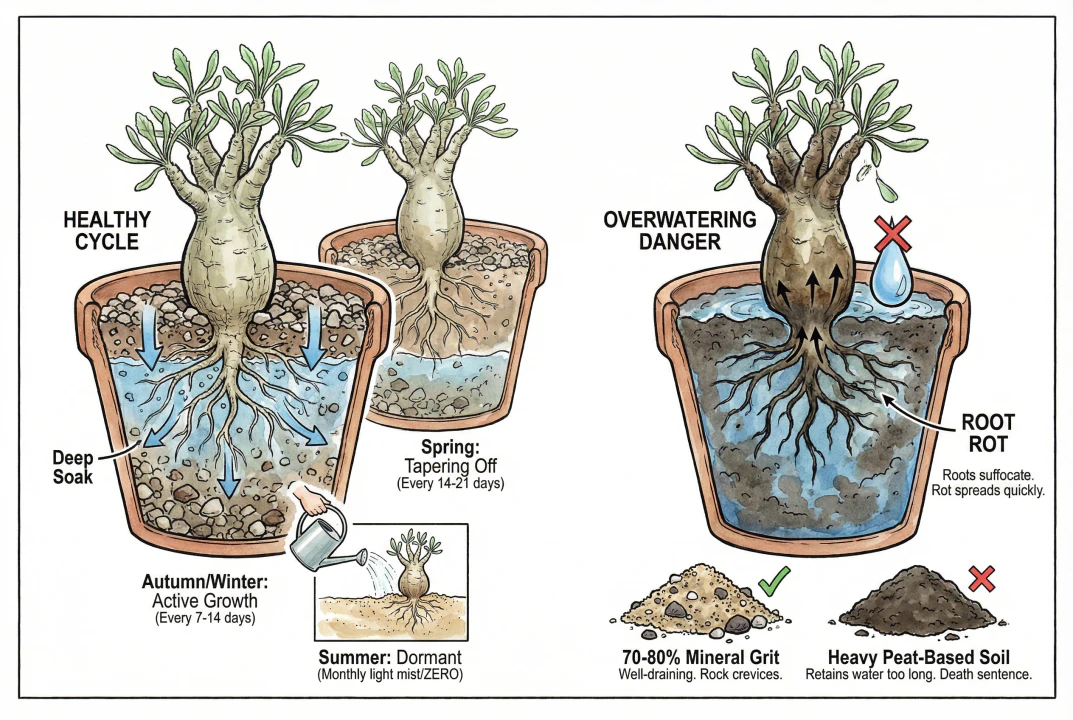
| Seasonal state | Status | Watering approach | Volume |
|---|---|---|---|
| Cool, bright season | Active growth | Water after the mix has dried to the plant’s safe depth | Thorough, then drain |
| Transition | Growth slowing | Lengthen the dry-down and watch new growth | Reduce only as needed |
| Hot, dim season | Rest or dormancy | Minimal maintenance water only when the species and plant condition require it | Avoid routine saturation |
Keep the dormant root zone mostly dry
You raise the risk of rot by watering while the mix is still wet or while a plant is dormant in summer. That keeps the root zone saturated and low in oxygen, which stresses roots and invites rot. Rot also depends on pathogens, temperature, and how long the mix stays wet, so a single watering does not guarantee an overnight failure. Wet and cool conditions are the more reliable danger pattern.
Adjust the amount to the species
While the plant is in active leaf, water deeply once the mix has dried. While it is dormant, water much less. Some winter growers take no summer water, while others need a small monthly drink. Humidity does not automatically replace water a resting plant may still need, so judge by the plant rather than a fixed rule.
Soil & Potting Secrets
Build Around Drainage and Aeration
Use a gritty, fast-draining mix. A mineral-heavy blend is a good default because a dense, water-retentive peat mix stays wet too long in cool weather. Do not treat any exact percentage as a rule. Some of these plants are grown in mixes closer to half mineral with some loam and compost. What matters is fast drainage and good aeration suited to your conditions, not hitting a specific number.
What is the best soil recipe?
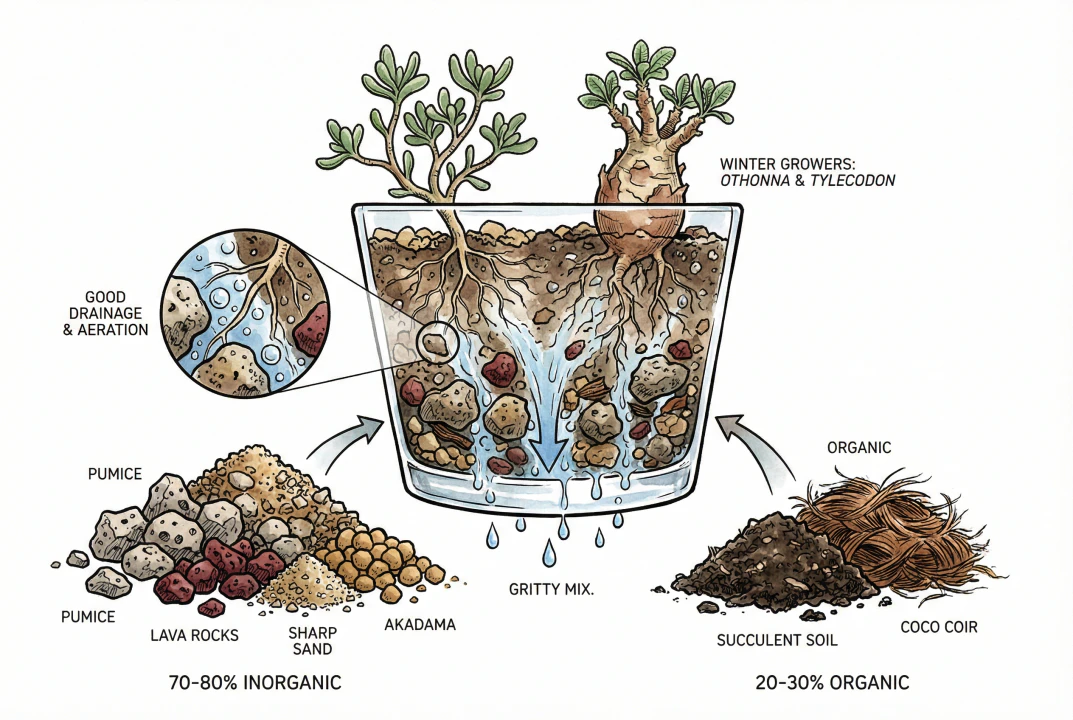
A gritty mix is a useful starting point. Combine mineral and organic components in a structure that drains freely while retaining enough moisture for the species and your watering habits. The right balance is a measured property of the mix, not a fixed percentage.
Adjust a bagged mix only when measured
If you would rather buy than blend, a bagged gritty mix is convenient, but read the current formula before buying. Some fast-draining blends combine pine bark with one or more calcined-clay grits, while others use different organic and mineral fractions. Any blend containing bark is not all-mineral, regardless of how gritty it looks. Treat the bagged mix as a starting point and compare its dry-down with your species and conditions.
Clay or Plastic Pots?
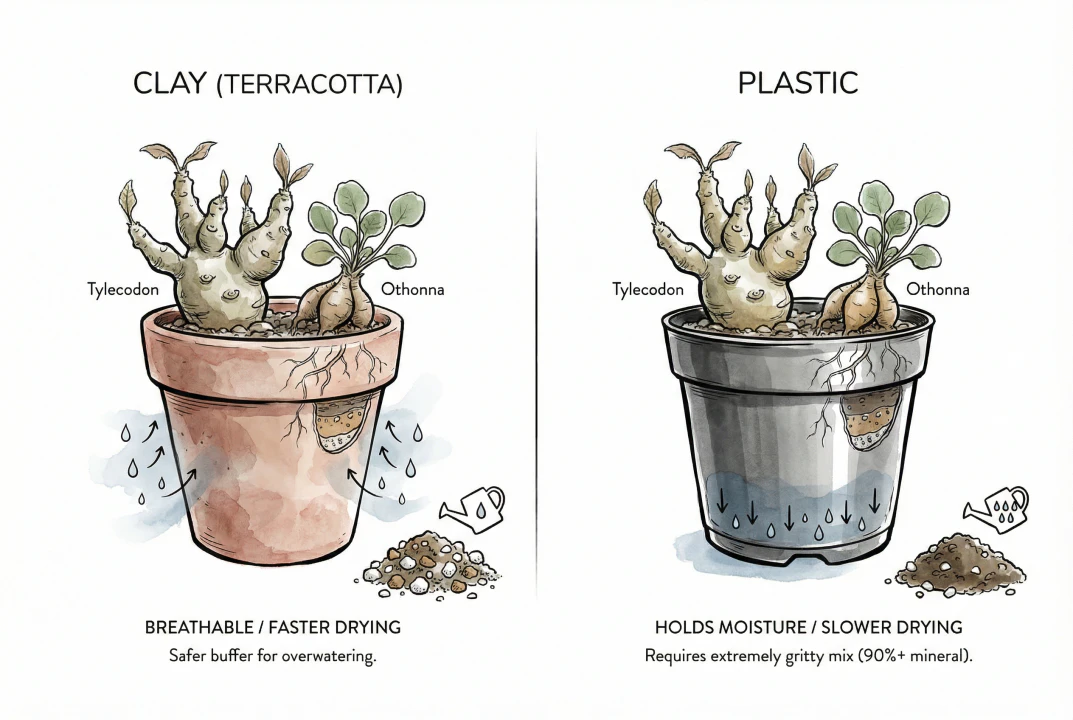
Match pot material to observed dry-down
Unglazed terracotta often dries faster because moisture can move through its walls. That may help in a wet setup but can over-dry a small pot in a hot, dry room. Plastic holds water longer, yet it remains usable with drainage holes and a mix matched to the plant. There is no hard mineral percentage requirement tied to the pot material. Either works when the mix and watering are calibrated together.
Tylecodon Specifics (The Poisonous Beauty)
Tylecodons are pachycauls, meaning they have thick, swollen stems that work as water reservoirs.
Are they dangerous?
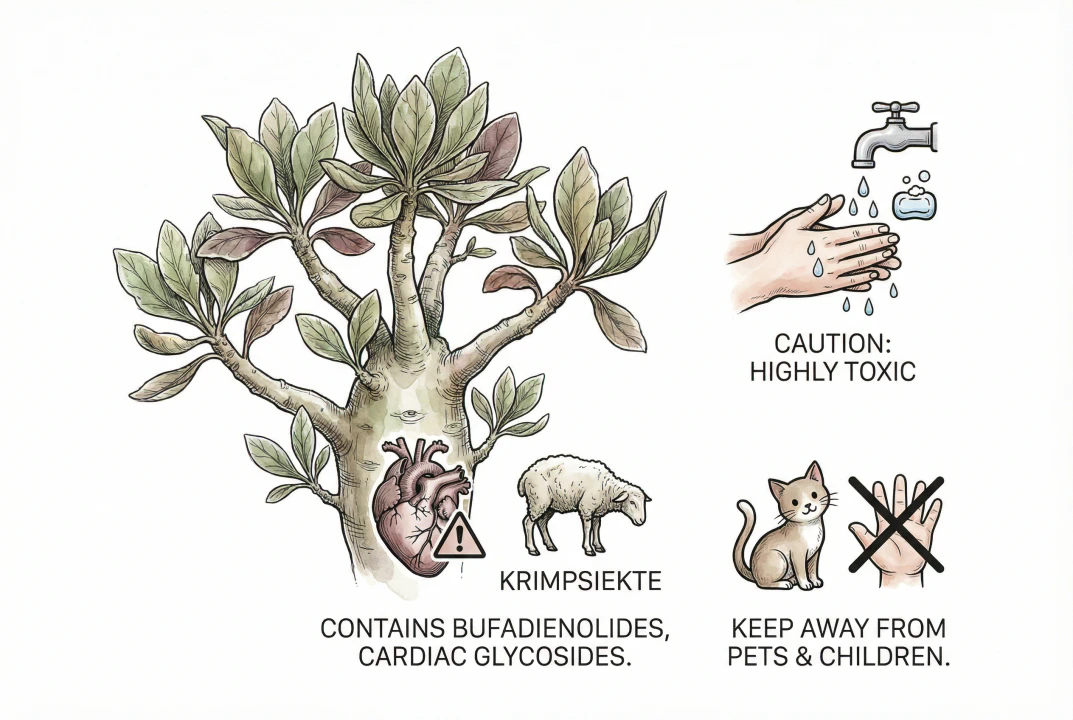
Treat Tylecodon as toxic until identified
Treat Tylecodon as potentially toxic. Some species contain bufadienolides associated with cumulative neurotoxic effects, and in South Africa these plants cause krimpsiekte in livestock. Secondary poisoning has also been documented in animals. The human risk is a reason to prevent ingestion and seek professional advice.
Prevent ingestion and handle sap carefully
The main hazard is ingestion. Keep the plant, its cuttings, and its sap away from children, pets, and livestock, and do not let anyone eat any part of it. Wearing gloves and washing your hands after handling broken stems is sensible hygiene. The cumulative toxicity refers mainly to eating small amounts repeatedly, not to routine skin contact. If ingestion is suspected, keep a sample of the plant and contact a poison-control service for people or a veterinarian for animals rather than trying home remedies.
Why do the leaves drop?
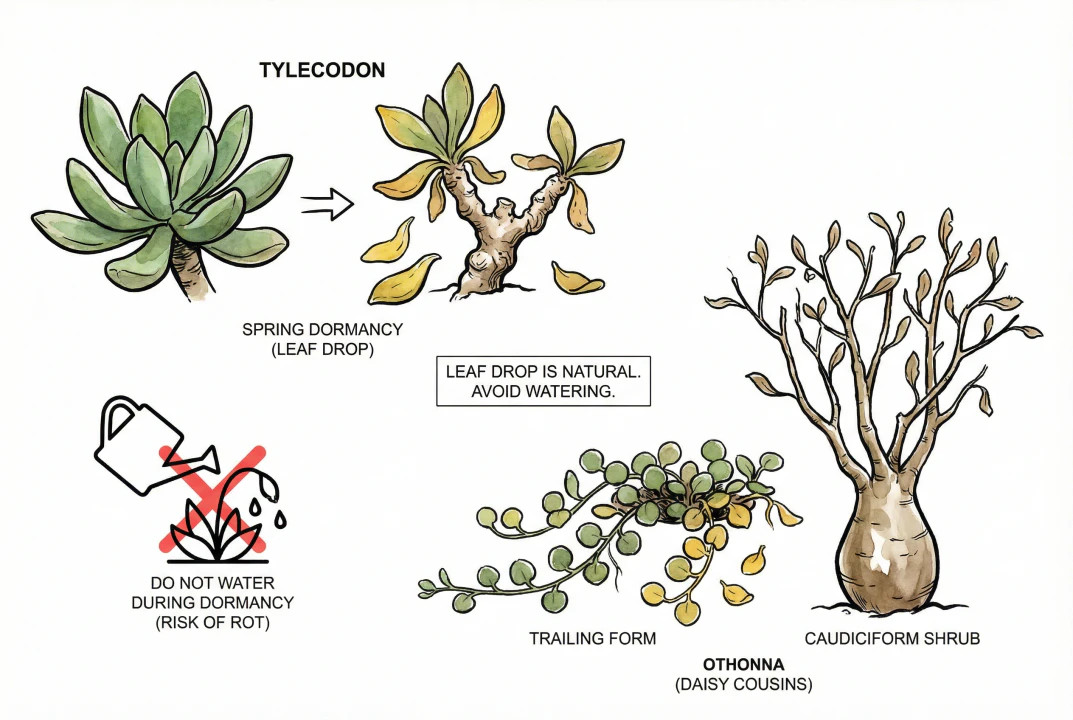
Separate seasonal dormancy from stress
Leaf drop as the season turns is the usual sign of dormancy. Tylecodon leaves yellow and fall, leaving bare stems. On schedule, that is normal, not sickness. Leaf yellowing can also come from root loss, dehydration, or disease, so check the season, new growth, and stem firmness rather than assuming every leaf drop is dormancy.
If the plant is genuinely going dormant, do not keep watering to save the leaves. That keeps the mix wet when the plant cannot use it and invites rot. If a plant is dropping leaves from dehydration rather than dormancy, it needs water, so confirm which condition is present.
Othonna Specifics (The Daisy Cousins)
Othonnas come in a wider range of forms, from trailing baskets to strange caudiciform shrubs.
Why does my Othonna look like a pickle?
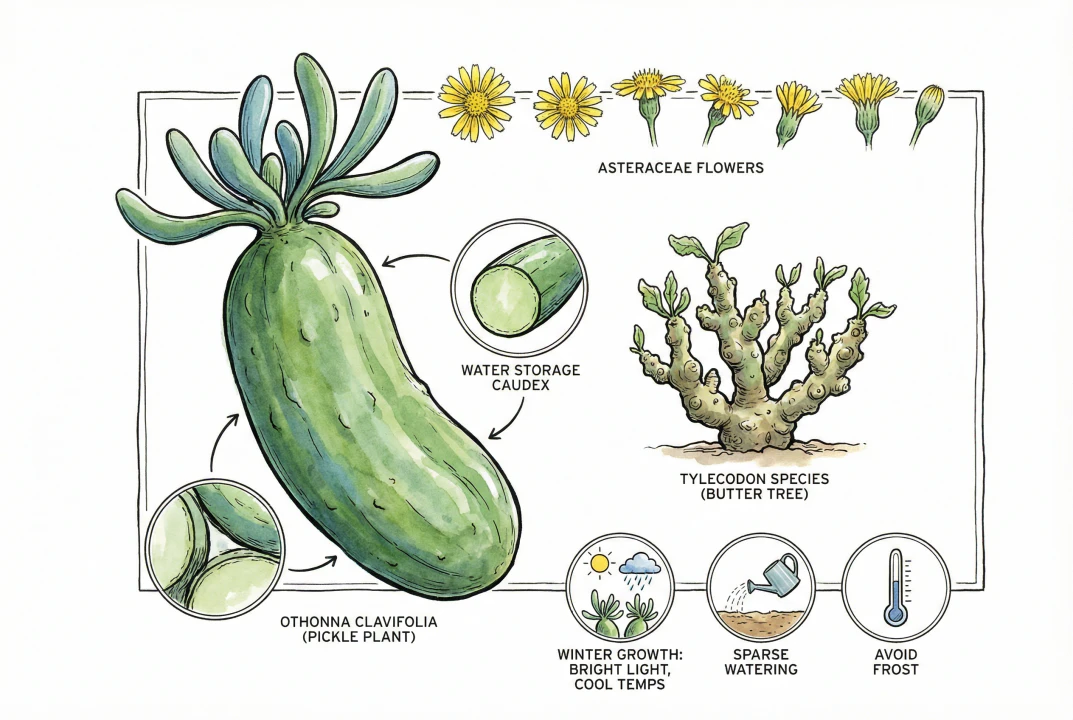
Expect species-level variation in form
Species such as Othonna herrei and Crassothonna clavifolia, formerly Othonna clavifolia, store water in swollen stems or leaves. Some have a lumpy, pickle-like look, though many are small plants and Crassothonna clavifolia is only a few inches tall. Unlike Tylecodon in the stonecrop family, these plants are in the daisy family and often produce small yellow flowers in the cool season.
Buy documented nursery-propagated plants
Crassothonna clavifolia is assessed by SANBI (2022) as Endangered, with a wild population declining under heavy illegal collection for the succulent trade, so buy documented, nursery-propagated plants and avoid wild-collected specimens.
Can they tolerate frost?
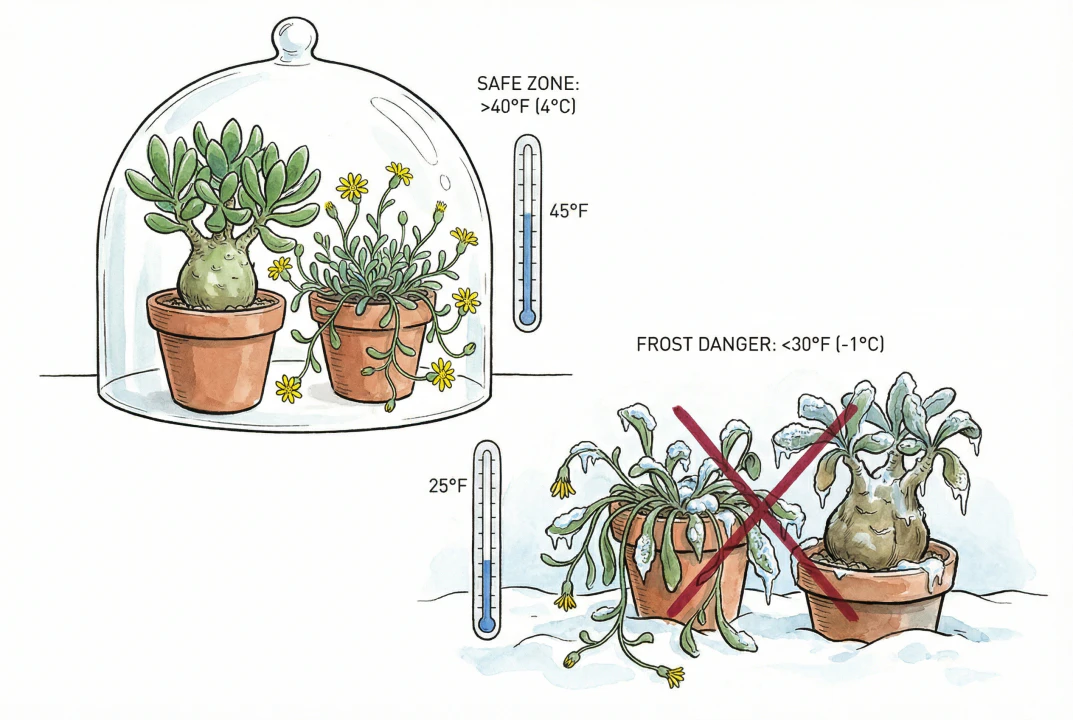
Use species-specific cold limits
Protect them from frost, especially as potted plants with wet roots. Some species experience frost in habitat, so tolerance varies with species, hardening, moisture, and exposure duration. For a container plant, use the species’ documented minimums and move it before a hard freeze rather than relying on one universal temperature.
Troubleshooting Common Issues
The Mushy Stem
Inspect the base and roots
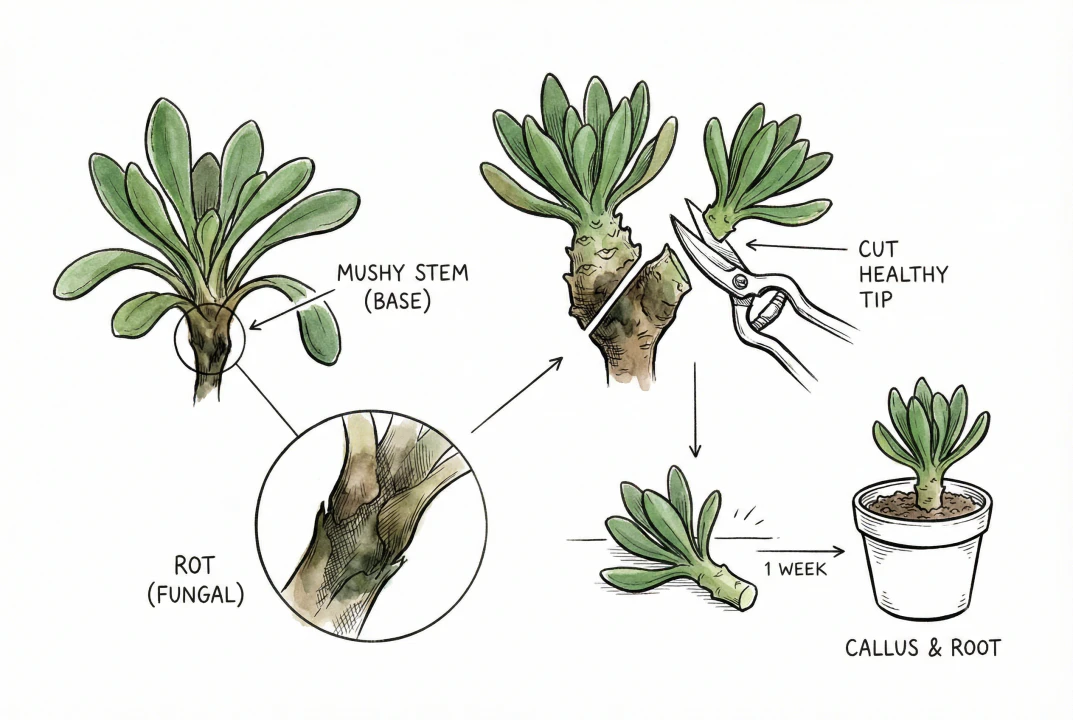
If the stem base feels soft, squishy, or black, inspect the roots and crown before changing water or cutting tissue.
Respond only after confirming the tissue
A soft, black, mushy base can indicate rot, but freeze injury, mechanical damage, or a localized lesion can look similar. Unpot and check the roots and crown to confirm. If it is rot, isolate the plant. Wear gloves and eye protection because Tylecodon sap is toxic, and use a blade disinfected between cuts. Cut back to firm, clean tissue, discard the diseased material, and disinfect the tools and pot. Base rot can be fatal, but you can try rooting a clean, healthy tip as a cutting after the cut dries and calluses. Callusing and rooting time vary with cut size, species, and conditions. Some Tylecodon cuttings can take up to a year to build good roots, and an unclear infection line can still cause failure.
The Stretched Neck (Etiolation)
Recognize stretched new growth
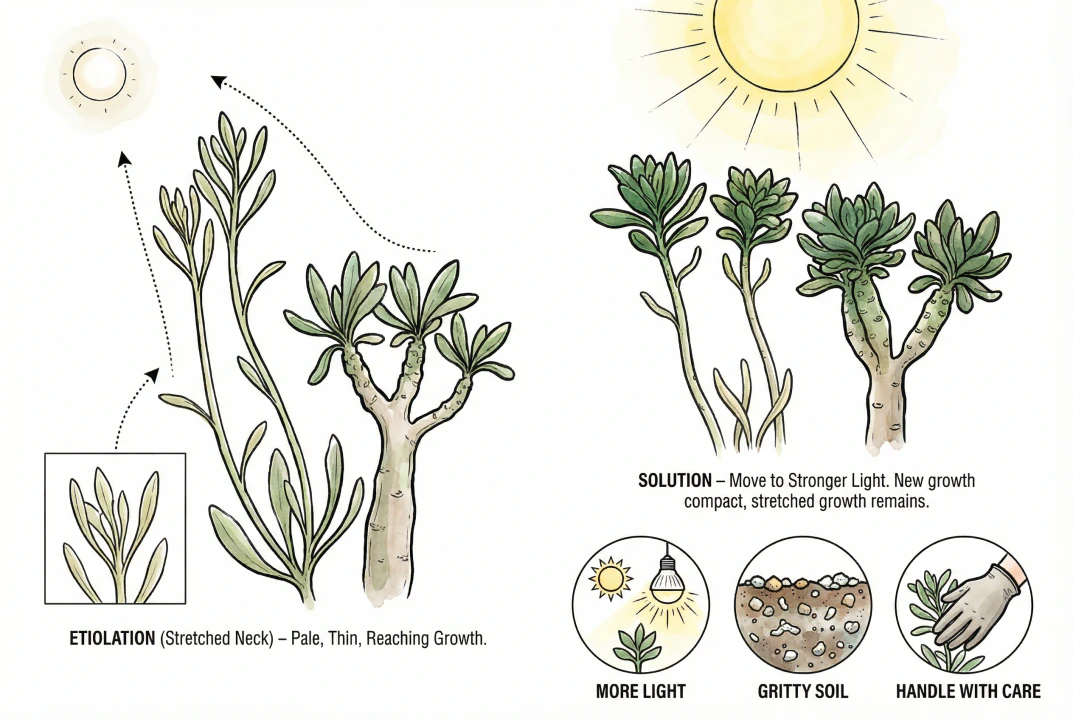
New growth that is pale, thin, and reaching toward the light points to weak exposure, although temperature and root stress can look similar.
Increase light gradually
Give it more light through a brighter spot or a grow light. Increase intensity gradually rather than moving a stretched, light-starved plant straight into full-strength light, which can scorch soft tissue.
Expect improvement only in new growth
Insufficient light can cause new growth to elongate toward the brighter side. You cannot shorten the existing growth, but new growth under better light can be more compact.