
Root Tuber vs Stem Caudex: Where and When to Water
Identify exposed caudex surfaces, check deep moisture, and choose water delivery by roots and growth state rather than anatomy alone.
Maya Ellison · 2026-09-01 · Updated 2026-10-24 · 11 min read
Key Takeaways
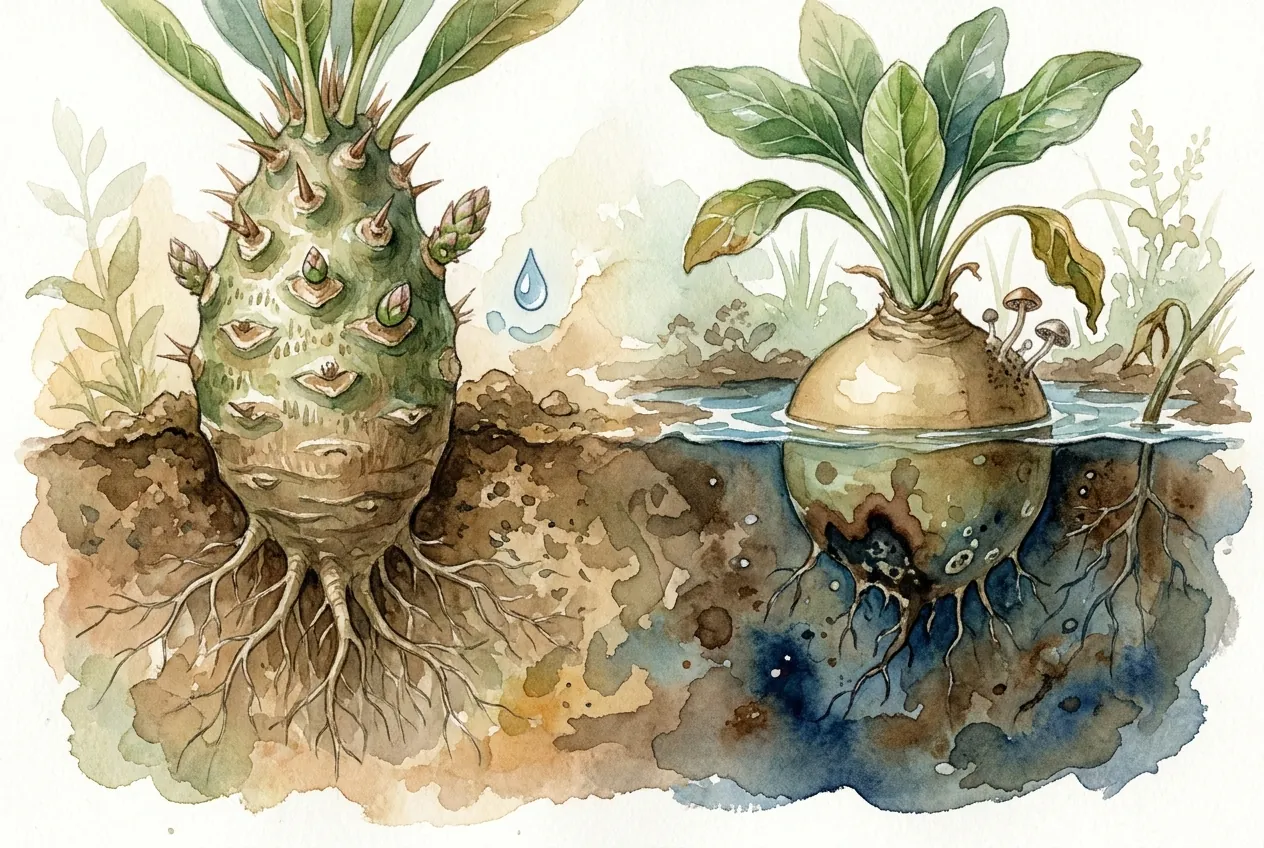
- A caudex may include stem, root, or hypocotyl tissue. Surface features are clues, not a watering schedule.
- Growth state, functioning roots, temperature, and deep moisture decide whether to water.
- Avoid pooling water against the collar, crown, wounds, or exposed tuber.
- Check both the rim and an accessible inner point because one dry edge can hide a wet core.
- Keep active winter growers separate from resting summer growers.
A summer soak schedule that keeps an Adenium fat can turn a dormant Stephania crown to mush within weeks. Same shelf, same watering can, opposite outcomes. The word caudex is doing too much work.
The swollen organ helps identify surfaces to protect, but it cannot decide the water dose on its own. An actively growing rooted tuber and a dormant stem caudex may need opposite treatment. Start with species, growth state, and the deep mix, then choose where to deliver water.
What anatomy changes
Nodes, leaf scars, buds, and roots help describe the plant. They do not create a universal soak rule for stems or a tiny-sip rule for tubers.
Two organs, two blueprints
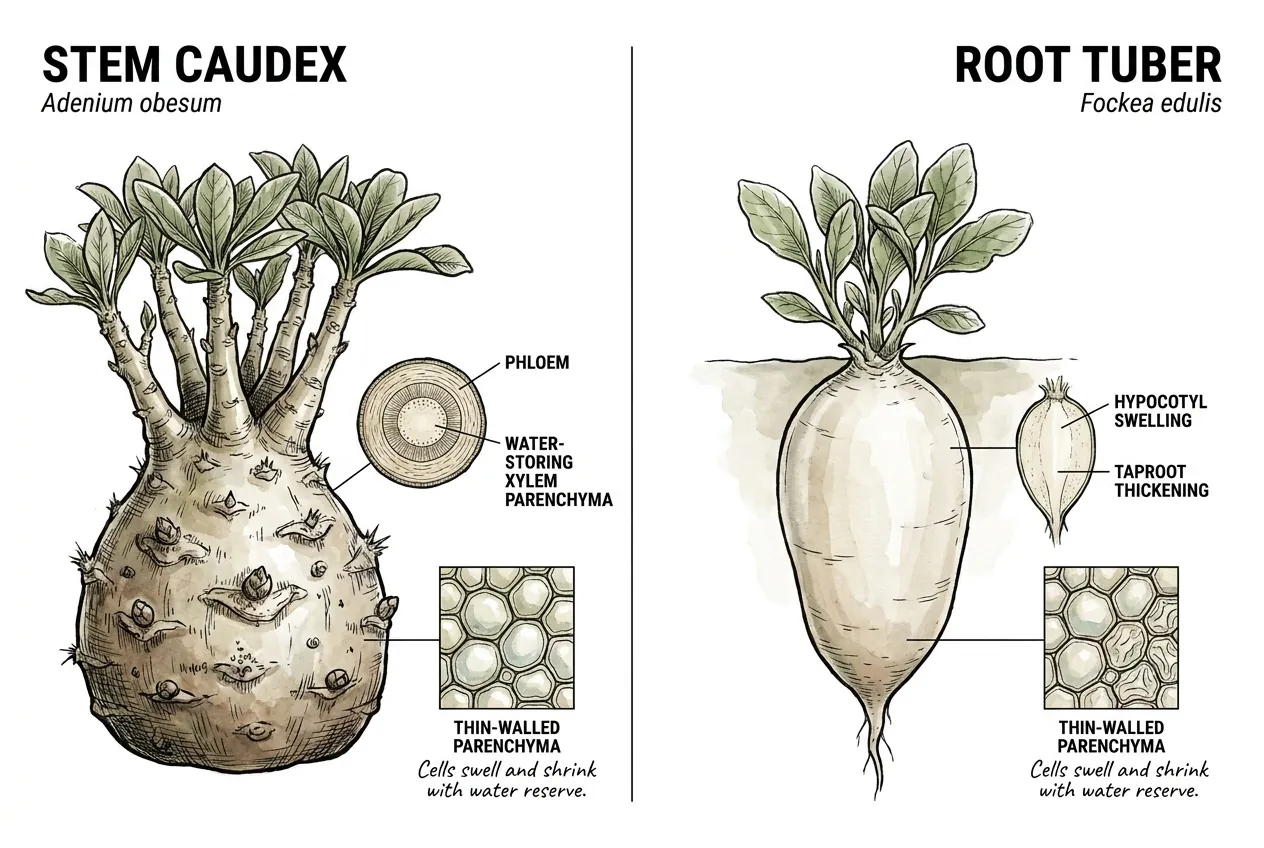
A stem caudex is a thickened stem. A 2023 comparative study of caudiciform development found that Adenium obesum thickens through a cambium that lays down solid rings of phloem and water-storing xylem parenchyma.
Because the organ is stem tissue, leaf scars, spine bases, and dormant buds persist on its surface.
Fockea edulis can combine hypocotyl swelling with a thickened taproot. Tuber is a shape and storage description that can involve different organs, so a smooth surface and a single crown are not enough to establish root origin.
A 2022 anatomical survey of ten succulent species across eight plant families found the water itself always sits in the same tissue class.
Thin-walled parenchyma cells swell and shrink as the plant spends and refills its reserve. That is why healthy organs of both types visibly plump and wrinkle through the year.
What the fat reserve actually buys
The reserve is a seasonal buffer, not a daily canteen. Field measurements on baobabs, the largest stem-storage plants on Earth, make the point. Only a small fraction of the stored water can be withdrawn before the tissue runs out of spendable reserve.
Pachycaul succulents mostly spend that water at season transitions. They drop leaves at the start of the dry season and use stored water to push the next flush of growth just before the rains return.
A fat trunk forgives a missed watering, but it does not replace a schedule.
Where common genera actually fall
Use this table to locate storage tissue, then check the named species’ season and roots before watering.
| Plant | Storage organ | Care implication |
|---|---|---|
| Adenium obesum | Swollen hypocotyl and stem | Check active growth and keep the collar well drained |
| Pachypodium lamerei, P. namaquanum | Stem trunk | These species can have different seasonal schedules |
| Pachypodium succulentum | Swollen stem base, half buried in habitat | Avoid prolonged wet contact at the buried base |
| Cyphostemma juttae | Stem trunk | Reduce water during confirmed leafless rest |
| Operculicarya decaryi | Stem trunk | Check current leaf and shoot activity |
| Adenia glauca | Stem | Keep stem-base drainage open |
| Fockea edulis | Root and hypocotyl tuber | Water functioning roots according to vine growth |
| Dioscorea elephantipes | Tuber, winter grower | Usually active in cooler months |
| Sinningia leucotricha | Tuber | Follow the individual species and growth cycle |
| Stephania species | Tuber | Distinguish rooted growth from a dormant or rootless tuber |
Genus reputation is not enough. SANBI describes the turnip-shaped storage base of Pachypodium succulentum growing half buried in habitat, while its famous relatives hold their water in fully exposed trunks.
Route each plant by its own organ, not by the name on the tag.
Simple check with a growth-state tag
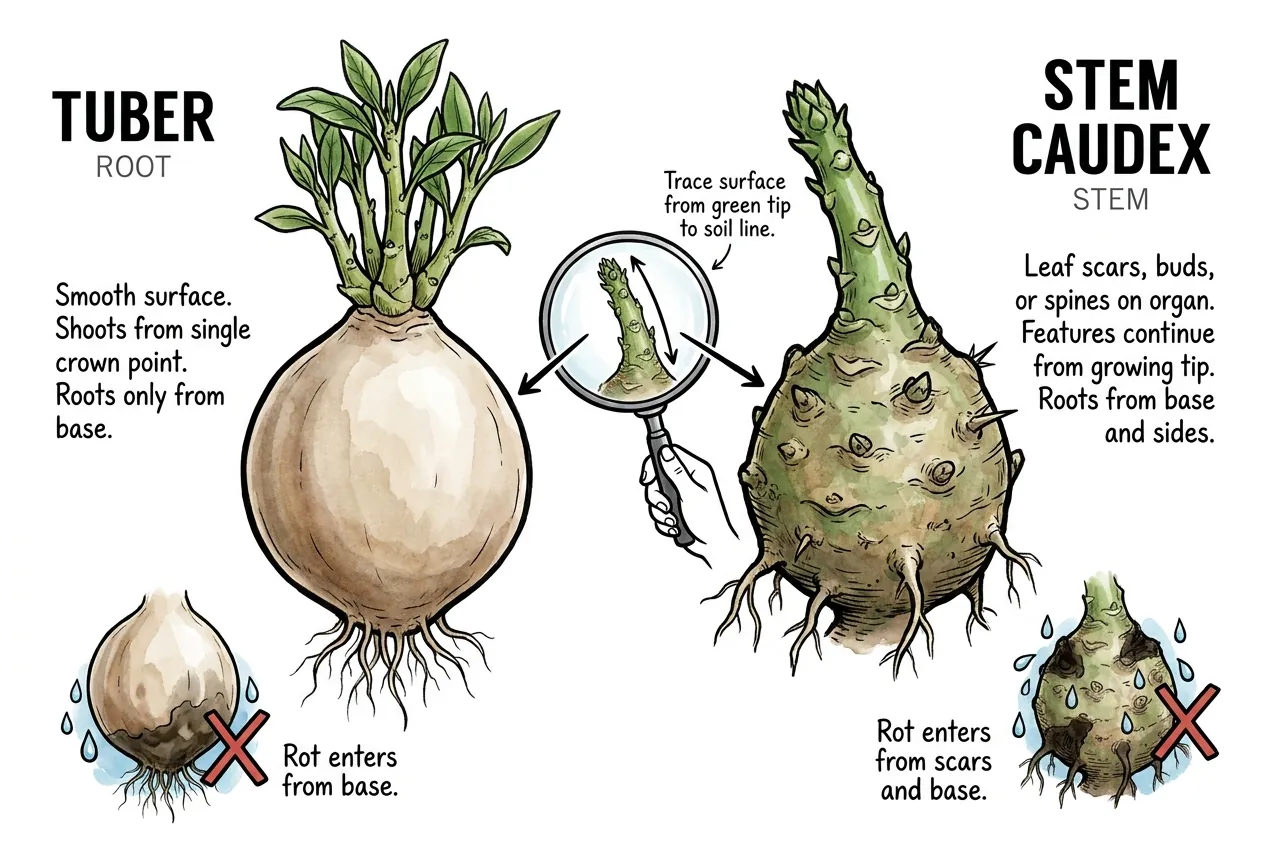
Trace the plant from a growing tip toward the soil line without scraping the bark. Note buds, leaf scars, any graft union, and exposed storage tissue. If the organ remains ambiguous, leave its identity unresolved and keep the same planting depth.
Write the species or unknown, active or resting, and the last deep-moisture result on the pot tag. Newly expanding leaves or vines matter more to the next watering than whether the body looks like a stem or tuber. Do not repot or water solely to settle the anatomical label.
For an unknown firm leafless plant in dry mix, pause watering while confirming its identity and rooting status. For a clearly growing plant, check deep moisture and roots instead of imposing a strict tuber drought. This avoids turning uncertainty into either an automatic soak or prolonged deprivation.
Where to inspect for rot
Rot can begin in fine roots, wounds, the collar, or storage tissue. Anatomy highlights places to inspect, but it does not establish an exclusive infection door.
Watch the collar and roots
Basal stem rot is documented in Adenium. Experimental inoculation studies on succulents show symptoms can be delayed, but cannot date a home infection from the day softness appears.
Avoid pooling at the crown and shoulder
Direct water toward the root-bearing mix and avoid puddles on an exposed tuber, crown, or wound. Dormant tubers need particular restraint. This protects vulnerable surfaces without assuming that every tuber must stay dry while it is actively growing.
Water delivery and checks, side by side
These are delivery and inspection choices. Both groups still need a growth-based watering decision.
| Decision | Stem caudex | Root or hypocotyl tuber |
|---|---|---|
| Water delivery | Wet the root-bearing mix evenly during active growth, then drain | Wet the root-bearing mix while avoiding the exposed organ |
| Dry-down check | Deep moisture plus pot weight | Deep moisture plus pot weight |
| Organ contact | No persistent pooling at the collar or wounds | No persistent pooling on the crown or shoulder |
| Leafless season | Follow species, roots, and confirmed rest | Follow species, roots, and confirmed rest |
Watering an actively growing rooted plant
In active growth, a stem caudex is a classic soak-and-dry succulent. NC State Extension’s prescription for Adenium is a sandy or gravelly mix with sharp drainage, because wet soil can lead to root rot.
Arkansas Extension adds a sizing rule, since a pot kept relatively small for the plant lessens the odds of overwatering.
During active growth, water the root-bearing mix evenly and let excess drain freely. Wait for the species-appropriate dry stage before repeating. If water pools against the trunk or the core stays wet, correct the setup rather than assuming stem anatomy makes a soak safe.
Measured check at two moisture locations
On an established plant with accessible mix, choose one point about 1 cm inside the rim and another halfway between rim and caudex. Insert clean wooden skewers gently to about two-thirds of pot depth for five minutes, then remove them. Stop if either meets roots or firm resistance. Skip an inaccessible inner point rather than puncturing storage tissue.
Two-thirds depth and five minutes are repeatable sampling choices, not a map of where every root lives. Compare darkening and adhering damp mix at both points. If the rim is dry but the inner sample is damp, wait and recheck the next day. The mismatch catches an edge reading that would otherwise trigger premature watering.
First check whether the skewer shows dampness in spare, freshly wetted mix of the same kind. Pale pumice may leave little color or residue even when it holds water. If that reference barely changes the wood, a clean skewer in the planted pot is an uncertain result, not proof of dryness.
Record the uncertain result beside pot mass and the last watering. Use an accessible view of the lower mix or wait for another check rather than pushing the skewer deeper. This prevents an unsuitable test material from turning a wet root zone into a false dry reading.
When a growing plant needs water, apply it to the root-bearing mix and drain. Recheck accessible points once after 60 minutes. A damp rim but dry inner sample suggests bypass flow. Do not keep pouring just to wet the exposed organ. Use the staged rewet check if the established active root ball is repellent.
Keep the exposed shoulder free of pooled water and debris. Do not raise a buried organ during this check, because exposure changes its conditions and can damage roots.
Read the organ before you reach for the can
Wilting and yellowing can accompany both drought and root damage. Combine the deep check with the pattern of softness. Gradual uniform reserve loss is different from one darkening, expanding soft patch, but neither appearance alone identifies a pathogen.
Remember
After an accidental soak, inspect for new darkening or softness daily for the first week without repeatedly squeezing the same tissue. If the plant stays firm and the mix dries, return to a weekly check. Act promptly on an expanding lesion. The firmness map gives the next steps.
What September changes for each type
For summer growers, fall is a controlled descent. NC State Extension sets a concrete trigger for Adenium, since once nights drop to 55°F the plants should come indoors to bright light with reduced watering.
Cyphostemma juttae drops its leaves for winter, and SANBI directs keeping it dry through the colder months.
Warning
For a firm, established summer grower in confirmed rest, withhold routine watering and check for gradual reserve loss. A four-to-six-week interval in a care sheet is not a command to water a still-wet pot or a seedling.
For winter growers the same month runs backward. Dioscorea elephantipes grows through winter and spring and rests through summer heat, so in Northern Hemisphere collections a late-summer vine from the crown is the wake-up bell.
First careful rim waterings follow the vine, not the calendar, and an early Dioscorea wake-up has its own playbook.
Mixed Pachypodium collections hold both seasonal patterns at once, as covered in Pachypodium watering by growth state.
| Plant | Organ type | September action |
|---|---|---|
| Adenium, Operculicarya, Cyphostemma | Stem caudex | Taper down as nights cool |
| Fockea edulis | Root and hypocotyl storage, season can vary | Reduce water if vines actually slow and yellow |
| Sinningia leucotricha | Tuber | Reduce water when this individual plant actually enters rest |
| Dioscorea elephantipes | Tuber, winter grower | Watch the crown, water on vine emergence |
Tag each pot by observed growth rather than the month alone. Resting summer growers may need longer dry intervals, while an extending Dioscorea still needs water as its mix dries. Skip an automatic farewell soak.
When the wrong rule has already done damage
After soaking a dormant plant accidentally, empty any saucer, confirm open drainage, withhold more water, and inspect the deep mix and tissue. Do not assume it is safe until a predicted symptom window has passed.
If a growing plant was kept too dry, check root condition and whether the mix accepts water before restoring normal watering. Persistent wilt in wet mix needs a root assessment rather than another dose.
Confirmed, advancing rot changes the job entirely. Cut back to clean tissue, let the wound dry in moving air, and choose treatment by diagnosis instead of panic drenching.
The root rot fungicide chooser matches chemistry to confirmed pathogens.